In-Depth Guides for Smarter Pest Control Decisions
Scratching in your attic at night? Bites you can't explain? Get straight answers about bats, bed bugs, roaches, and the pest emergencies Michigan homeowners face most.
Share:
Summary:
The bites showed up on your arms this morning. Could be mosquitoes. Could be bed bugs. The difference matters because one means opening windows at night and the other means you’ve got a serious problem hiding in your bedroom.
Bed bug bites typically appear in clusters or lines, often on areas that were exposed while you slept. But here’s the frustrating part—not everyone reacts to bed bug bites the same way. Some people show obvious welts. Others show nothing at all, even with active infestations.
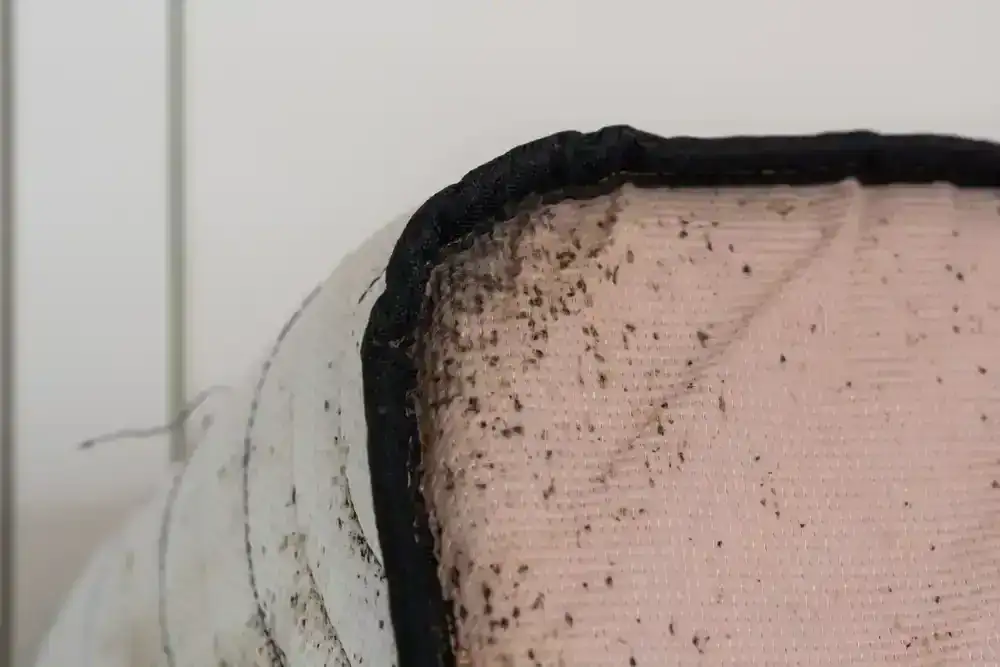
The bites alone won’t tell you what you’re dealing with. You need to look for the other signs that bed bugs leave behind. Small dark spots on your sheets or mattress seams. Tiny bloodstains where you crushed a bug while sleeping. A sweet, musty smell in heavy infestations. And if you’re lucky enough to spot the actual bugs, they’re about the size of an apple seed, flat, and reddish-brown.
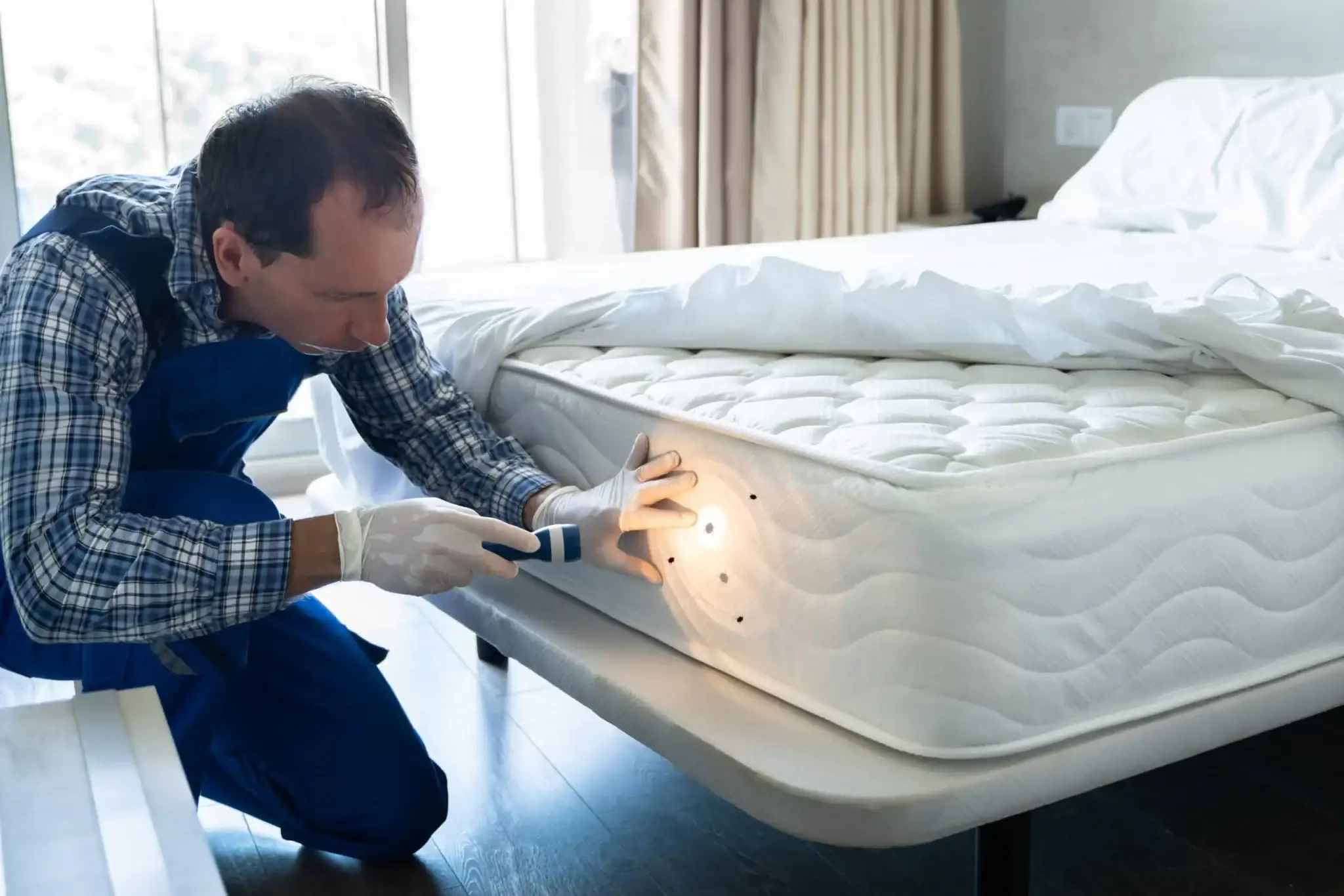
You pulled your mattress apart looking for bed bugs and didn’t find anything. That should be good news, except visual inspections only catch about 30% of bed bug infestations. The other 70% stay hidden in places you’d never think to check.
Bed bugs don’t just live in beds. They hide in electrical outlets, behind baseboards, inside furniture seams, and in cracks so small you wouldn’t notice them without taking your room apart. They’re masters at staying out of sight, coming out primarily at night when you’re asleep and vulnerable.
This is exactly why canine bed bug detection exists. Trained detection dogs can smell bed bug pheromones at concentrations humans can’t detect, even when the bugs are hiding deep in walls or furniture. The accuracy difference is significant—properly trained dogs achieve 95-98% detection rates in controlled studies, compared to that 30-40% rate for human visual inspection.
We’re one of fewer than 100 companies in the United States offering certified canine bed bug detection. Our dogs are trained to alert only to live bed bugs and viable eggs, not dead bugs or old evidence. This means you get accurate information about whether you have an active infestation that needs treatment, or if you’re dealing with something else entirely.
The service matters most when you’re not sure what you’re dealing with. Maybe you found one suspicious bug but can’t find any others. Maybe you’re getting bites but there’s no visible evidence. Maybe you just moved into a new place and want confirmation before unpacking. A canine inspection gives you reliable answers fast, usually within minutes per room, so you can make informed decisions instead of guessing.
For Genesee County and Shiawassee County residents, this level of detection technology typically only shows up in major metropolitan areas. Having local access to it means you can confirm or rule out bed bugs without the anxiety of wondering whether you missed something during your own inspection.
If you’ve never seen a bed bug before, you might not recognize one even if it’s sitting right in front of you. They’re small—about the size and shape of an apple seed—with flat, oval bodies that are reddish-brown in color. After feeding, they swell up and take on a more elongated shape.
The nymphs (young bed bugs) are even harder to spot. They’re translucent or pale yellow, about the size of a pinhead, and nearly invisible against light-colored surfaces. You might see their shed skins before you see the actual bugs, since they molt five times before reaching adulthood.
Bed bugs in Michigan homes gravitate toward sleeping areas because that’s where their food source is. Your mattress seams and box spring are the most common hiding spots, but they’ll also set up in headboards, nightstands, dressers near the bed, and upholstered furniture. In apartments and multi-unit housing, they can travel between units through walls, electrical conduits, and shared ventilation systems.
The geographic data tells the story of how serious the problem has become locally. Detroit ranked 3rd on the 2025 Orkin bed bug report, moving up three spots from the previous year. Grand Rapids came in at 7th, jumping seven spots. Flint ranked 16th, also up seven spots. Even Lansing made the list at 48th, moving up four positions. These aren’t random statistics—they reflect real infestations affecting real Michigan families.
Bed bugs don’t discriminate based on cleanliness. They’re hitchhikers that travel on luggage, clothing, used furniture, and personal belongings. You can pick them up from hotels, public transportation, movie theaters, or a friend’s house without even knowing it. Once they’re in your home, they reproduce quickly. A single female can lay hundreds of eggs in her lifetime, and those eggs hatch in about a week under the right conditions.
The emotional toll of a bed bug infestation goes beyond the physical bites. People lose sleep worrying about being bitten. They become anxious about having guests over or visiting other people’s homes. Some develop psychological effects that persist even after the infestation is eliminated. This is why early, accurate detection matters so much—catching the problem while it’s still small makes treatment faster, less expensive, and far less stressful.
Treatment isn’t something you want to attempt on your own. Store-bought sprays might kill the bugs you can see, but they won’t reach the eggs hidden deep in your furniture or the bugs tucked into wall voids. Professional treatment targets all life stages and all hiding spots, using methods that actually eliminate the entire population instead of just scattering them to other rooms.
Want live answers?
Connect with a First Choice Pest Control expert for fast, friendly support.
You’ve got bats in your attic. You want them out. But if you call a pest control company right now, we might tell you that you have to wait. That’s not a scheduling issue—it’s the law.
Michigan bats are protected species, and removing them at the wrong time of year is illegal. You can’t exclude bats during hibernation in winter, and you can’t exclude them during maternity season when flightless pups are present. The legal window for bat exclusion typically runs from late summer through early fall, after the pups can fly but before hibernation begins.
The protected species include the Indiana bat, Northern long-eared bat, and others that have been devastated by white-nose syndrome. Even the common little brown bats and big brown bats that often roost in Michigan attics are subject to seasonal protections. Violating these laws can result in significant fines and legal consequences.

Bat exclusion isn’t about trapping or removing bats by hand. It’s about installing one-way devices that let bats exit your attic but prevent them from getting back in. The bats leave on their own to hunt for food at night, and when they try to return, they find their entry point sealed.
The process starts with a thorough inspection to identify every possible entry point. Bats can squeeze through gaps as small as 3/8 of an inch—about the width of a dime. Common entry points include gaps in soffits, damaged roof vents, ridge vents, loose fascia boards, and openings where different building materials meet. Miss even one entry point and the bats will find it.
Once all entry points are identified, one-way exclusion devices get installed at the active exits. These can be exclusion tubes, netting, or valves depending on the location and situation. The bats can push through to leave but can’t figure out how to get back in. After a few days, once all bats have exited, those one-way devices get removed and the entry points get permanently sealed with materials the bats can’t chew through.
The timing restriction exists because of maternity colonies. Female bats give birth to pups in late spring and early summer, typically from late May through mid-August in Michigan. The pups can’t fly for several weeks after birth. If you exclude the adult bats during this period, the flightless pups get trapped inside and die. Michigan law prohibits this specifically to protect bat populations that are already struggling.
This is why fall becomes the ideal window for bat work. The pups born in summer are now capable of flight. The bats haven’t entered hibernation yet. They’re still active and leaving the roost nightly to feed. This gives you a narrow but workable timeframe to get the exclusion done legally and effectively.
After the bats are out, you’re often left with contamination that needs addressing. Bat guano accumulates over time, compressing insulation and reducing its effectiveness. The urine can stain and damage wood and drywall. Guano also carries the risk of histoplasmosis, a fungal disease that can cause serious respiratory problems if you disturb dried droppings and inhale the spores.
Professional attic restoration removes contaminated insulation, cleans and disinfects the space, and installs fresh materials. This isn’t just about smell—it’s about restoring your attic to a safe, functional condition and preventing future health risks. Some pest control companies offer this as part of their bat service. Others partner with restoration specialists. Either way, it’s a necessary step that shouldn’t be skipped.
The scratching started a few nights ago. It’s coming from above your bedroom, usually after dark, sometimes in the early morning. You’re not imagining it, and it’s not going to stop on its own.
Scratching sounds in Michigan attics typically mean one of three things: bats, squirrels, or rodents. Each has a different pattern that helps you identify what you’re dealing with before you even see the animal.
Bats make scratching and squeaking sounds, usually at dusk and dawn when they’re most active. You might hear them moving around as they prepare to leave for the night or return in the morning. The sounds are typically light and scattered since bats are small and don’t move around much once they’re roosting. If you hear scratching during daylight hours, it’s probably not bats—they’re nocturnal and sleep during the day.
Squirrels are the opposite. They’re active during daylight hours, especially in the morning. If you hear heavy scratching, rolling sounds like nuts being moved around, or persistent gnawing during the day, you’re likely dealing with squirrels. They’re larger than bats and make more noise when they move. They also tend to be more destructive, chewing on wood and wires to keep their constantly-growing teeth under control.
Mice and rats are nocturnal like bats, but the sounds are different. You’ll hear scurrying along walls, scratching as they gnaw on materials, and sometimes squeaking if you have a large population. Rodents are relentless—they don’t just pass through your attic, they nest there, reproduce there, and create extensive damage over time.
The fall and winter months see the highest rates of rodent entry in Michigan homes. As temperatures drop and field habitats get disrupted by harvest, mice and rats seek warm shelter. They can squeeze through openings as small as a dime for mice or a quarter for rats. Once inside, they contaminate surfaces with droppings and urine, chew through wires creating fire hazards, and reproduce rapidly. A few mice in October can become a serious infestation by January if left unchecked.
Rodent control isn’t just about trapping the animals you have now. It’s about sealing every entry point so more can’t get in. Professional rodent control includes a thorough inspection to identify how they’re entering, strategic trapping or baiting to eliminate the current population, exclusion work to seal gaps and vulnerabilities, and often cleanup to remove contamination and nesting materials.
The same approach applies to squirrels and other wildlife. Trapping removes the current animals, but exclusion prevents new ones from moving in. In Genesee County and Shiawassee County, properties near wooded areas or with mature trees close to the roofline face higher wildlife pressure. Understanding your property’s specific vulnerabilities helps create a control plan that actually works long-term instead of just addressing the immediate problem.
The questions that brought you here—whether you really have bed bugs, when you can legally remove bats, what’s making those sounds in your attic—don’t have one-size-fits-all answers. Your situation is specific to your home, your location, and what’s actually happening behind your walls or in your bedroom.
What matters most is getting accurate information so you can make informed decisions. Canine bed bug detection gives you reliable answers about infestations that visual inspections miss. Legal bat exclusion done at the right time protects both your home and Michigan’s protected bat populations. Professional rodent control addresses the current problem and prevents the next one.
If you’re dealing with any of these issues in Genesee County or Shiawassee County, we bring 26 years of experience and specialized services most companies don’t offer. You’ll work with the same technician who gets to know your property, not a rotating cast of strangers. And you’ll get solutions designed for Michigan’s specific pest challenges, not generic approaches that work somewhere else but fail here.
Article details:
Share:
Continue learning: