In-Depth Guides for Smarter Pest Control Decisions
Discover the key differences between hornets, wasps, and bees, plus safe removal protocols and when DIY becomes dangerous in Michigan.
Share:
Summary:
In Michigan, the European hornet is the only true hornet species, measuring up to 1.5 inches with yellow-striped abdomen, long antennae, and reddish thorax. They’re most active at dusk and scavenge for food, especially near lights.
Bees can occasionally be aggressive when nests are disturbed, but they’re much less aggressive than wasps or hornets. Hornets have long bodies with thin waists, differentiating them from bees, and their heads are wider than wasps.
The distinction matters because each requires different removal approaches and safety precautions.
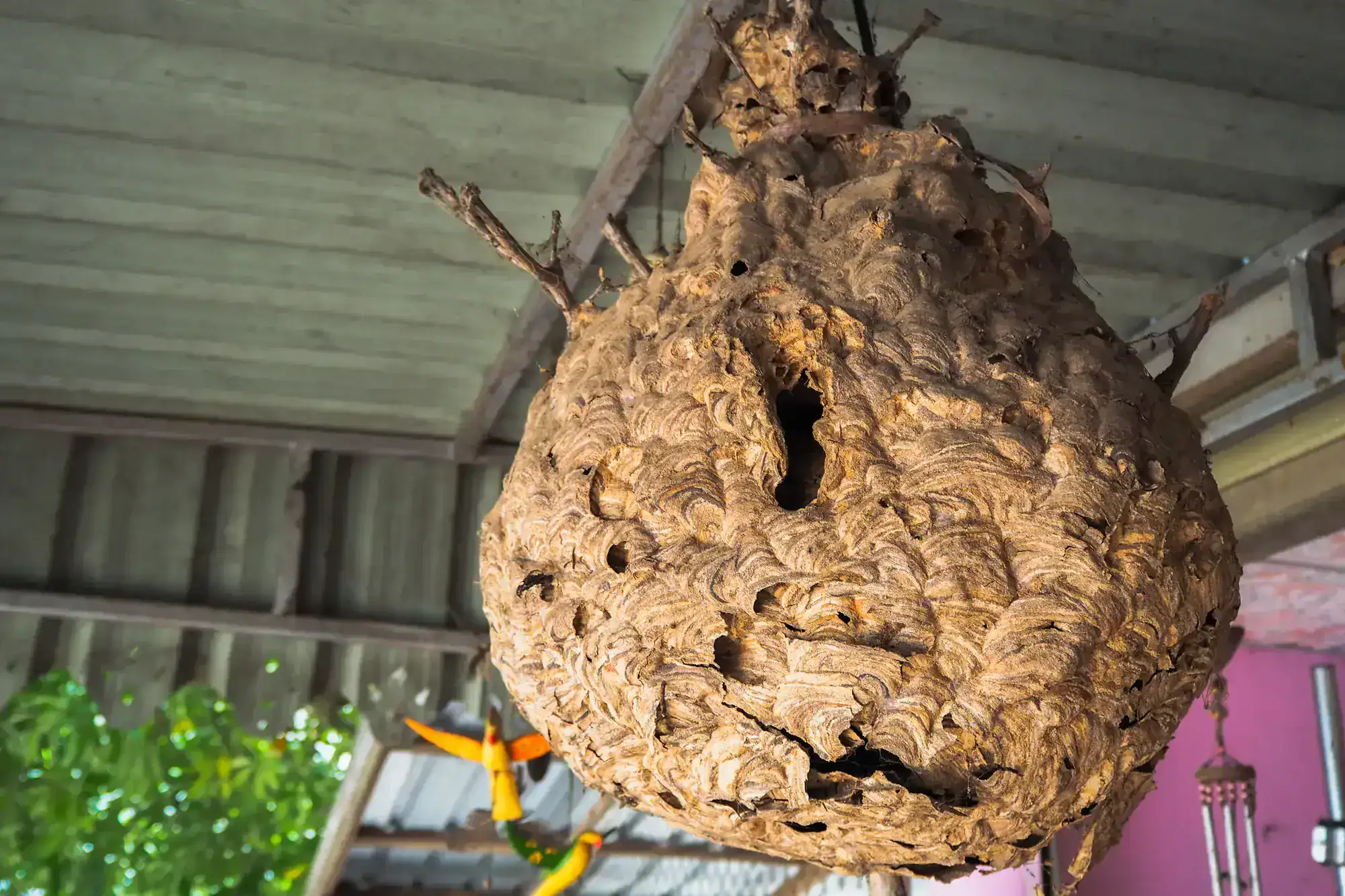
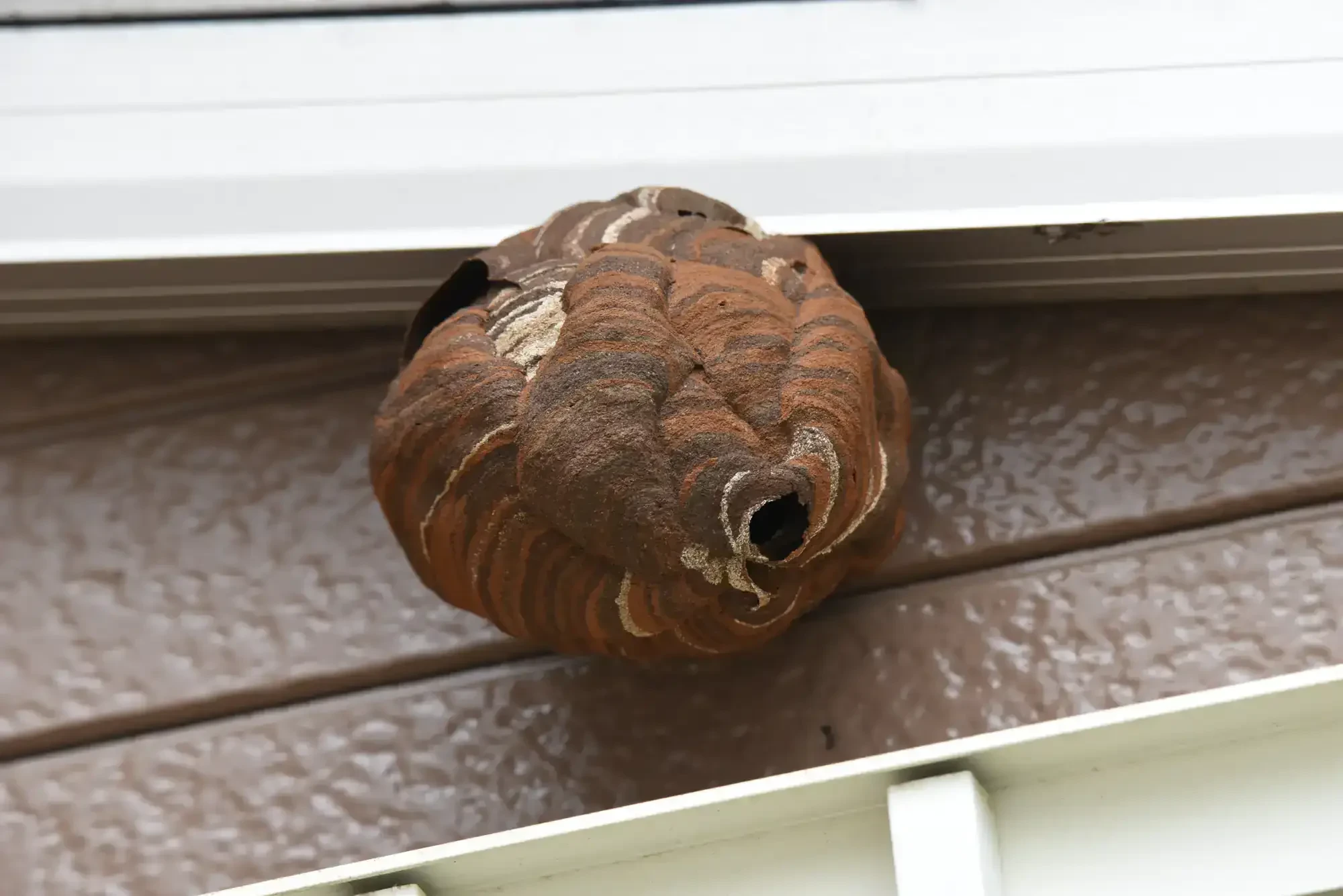
Hornets live in paper-like hives located in high, covered areas like outbuildings, eaves, or chimneys. They look for dry, secure places such as tree limbs, roof overhangs, or attic vents, with bald-faced hornets being most common in Michigan, building large gray paper-like nests that expand through summer.
German yellowjackets often nest inside buildings, attics, walls, and outdoor grills, easily provoked and found in suburban areas. Ground-nesting yellow jackets are often discovered painfully while mowing, as vibrations from lawn equipment irritate them and stimulate defensive responses.
European paper wasps build nests under eaves, inside light fixtures, and in outdoor furniture, being less aggressive than hornets but still capable of stinging when disturbed. Paper wasps create umbrella-shaped nests on almost any surface from tree branches to porch ceilings or window tops.
Understanding these nesting preferences helps you inspect your property safely and identify potential problem areas before colonies reach dangerous sizes. If you notice increased hornet activity, observe where they’re flying to locate nests without putting yourself at risk.
Bees pollinate over 80% of the world’s plants, including over 90 crops like apples, melons, cranberries, and broccoli. While hornets are aggressive and territorial, honey bees play a vital role in pollination, so if you spot a beehive, contact a local beekeeping association for relocation rather than spraying.
Unlike honey bees which are critical pollinators, hornets offer minimal ecological benefit and pose higher risk to human safety, especially when nests are built close to homes or playgrounds. Yellowjackets are among the most aggressive stinging insects between bees, wasps, and hornets.
Wasp and hornet stings can be painful and life-threatening, especially for those with allergies, and unlike bees, wasps can sting multiple times making infestations a serious safety concern. Hornets and social wasps can sting repeatedly, and those with allergic reactions may require emergency care after just one encounter.
The key difference is that beneficial bees deserve protection and relocation, while aggressive hornets and wasps near your home require immediate professional removal for family safety. Michigan hornet colonies reach peak size in late summer, becoming large, aggressive, and highly protective of their nests.
Want live answers?
Connect with a First Choice Pest Control expert for fast, friendly support.
When attempting DIY strategies, prioritize safety by wearing protective clothing like long sleeves, pants, gloves, and veils to minimize sting risk. Wasps and hornets hate peppermint oil—place cotton balls soaked in peppermint oil near problem areas or spray diluted peppermint oil solutions.
DIY nest removal is risky and not recommended due to dangers involved, as hornets and wasps become aggressive when nests are disturbed, leading to painful stings and potential allergic reactions. If nests are larger than a softball, near people or pets, or located high up, call a professional.
Prevention works better than removal attempts for homeowner safety.
Remove food sources attracting them—eliminate sugary items like soda and protein sources like pet food, then clean the area thoroughly. Seal trash cans and compost bins since wasps and hornets are attracted to food smells.
Change outdoor light bulbs to yellow or sodium vapor lights, as wasps and hornets are attracted to standard lighting. Plant mint in gardens or pots around your home—their strong scent keeps wasps and hornets away while deterring other pests.
Wasp traps work by luring insects with sugar water into containers they can’t escape—make DIY versions by cutting the top off two-liter bottles, inverting it, and hanging near problem areas. However, traps likely won’t completely solve wasp problems since not all insects will enter, so locate them nearest to nest entrances for best results.
Certain social wasps like European paper wasps won’t build nests near other colonies, so hanging decoy hives early in season can deter new wasps from settling. These prevention methods work best before nests become established, but once you have active colonies, professional intervention becomes necessary for safety.
If a hornet flies near you, resist the urge to swat—quick movements make them feel threatened and more likely to sting, so remain calm, stay still, then slowly walk away. Hornets don’t give much warning before attacking, and even approaching a nest too closely can trigger a swarm.
Don’t try removing bald-faced hornet nests yourself—it’s risky and rarely successful due to their aggressive nature, and they’ll attack en masse if threatened. Store-bought sprays don’t reach deep into larger infestations, and disturbing nests can send them tumbling inside your home, potentially causing serious injury or property damage.
If you’re allergic to stings, let someone else handle the problem—one sting at the wrong time or multiple attacks could be fatal. Since wasps build nests in trees, under eaves, or at porch ceiling tops, you’ll likely need ladder access, making falls especially dangerous when angry wasps fly toward your face.
Treating wasp nest removal and hornets after dark greatly reduces chances of being stung, but this increases fall risks and requires proper lighting. Michigan’s unpredictable weather and multiple species make professional identification and removal the safest choice for protecting your family.
Professional exterminators have proper gear and techniques to remove nests while ensuring all larvae and adult wasps are eliminated. Professional help is safest for nests located high up or inside wall voids, with experts equipped to treat nests up to 25 feet high.
We bring 26 years of experience with emergency response within 24-48 hours, especially for stinging insects near high-traffic areas. You’ll work with the same experienced technician visit after visit, ensuring consistent service quality and property knowledge.
Don’t let dangerous stinging insects threaten your family’s safety. Contact us for expert hornet removal that protects your home and gives you peace of mind throughout Michigan’s challenging pest seasons.
Article details:
Share:
Continue learning: