
In-Depth Guides for Smarter Pest Control Decisions
Worried about bringing bed bugs home from your next trip? Learn the hotel inspection techniques and travel strategies that actually work to protect you and your home.
Share:
Summary:
Bed bugs don’t care if you’re staying at a budget motel or a five-star resort. They’re not a reflection of cleanliness or housekeeping standards. They’re opportunists that follow people, and hotels see a constant rotation of guests from all over the world.
That’s the problem. Every traveler who walks through the door could be carrying bed bugs from their last stop. These pests are about the size of an apple seed, flat enough to hide in the seams of a mattress, and patient enough to wait months for their next meal.
Summer is peak season. More than half of pest control professionals say they get the most bed bug calls during summer months when travel picks up. Flint ranks among the top 25 cities nationwide for bed bug activity, which means if you’re traveling from Genesee County, MI, you’re already in an area where these pests are more common than most places.
The biggest risk isn’t getting bitten while you sleep at a hotel. It’s what happens after you check out.
Bed bugs crawl into the folds of your luggage, the seams of your clothing, or even between the pages of a book you tossed on the nightstand. They don’t need much—just a dark crack to hide in and a ride to their next destination. Once they’re in your suitcase, they’re coming home with you.
Here’s what makes them so dangerous: they can survive for over a year without feeding. You could bring one home, and it might not make itself known for months. By then, a single female could have laid hundreds of eggs, and you’re dealing with a full-blown infestation instead of a single stowaway.
And they spread fast. Bed bugs don’t just stay in your bedroom. They move through walls, into furniture, behind picture frames, and anywhere else that’s dark and close to where people sleep or sit. What starts as one or two bugs in your luggage can become a problem that costs thousands to eliminate professionally.
That’s why prevention matters so much. Catching bed bugs before they enter your home is infinitely easier than trying to eliminate them once they’ve settled in. You’re not being overly cautious by inspecting your hotel room and taking precautions with your luggage. You’re being smart.
Most people have no idea what to look for. Only about 28% of Americans actually check their hotel rooms for bed bugs before unpacking. That means most travelers are rolling the dice every time they stay somewhere new. But you don’t have to be part of that statistic.
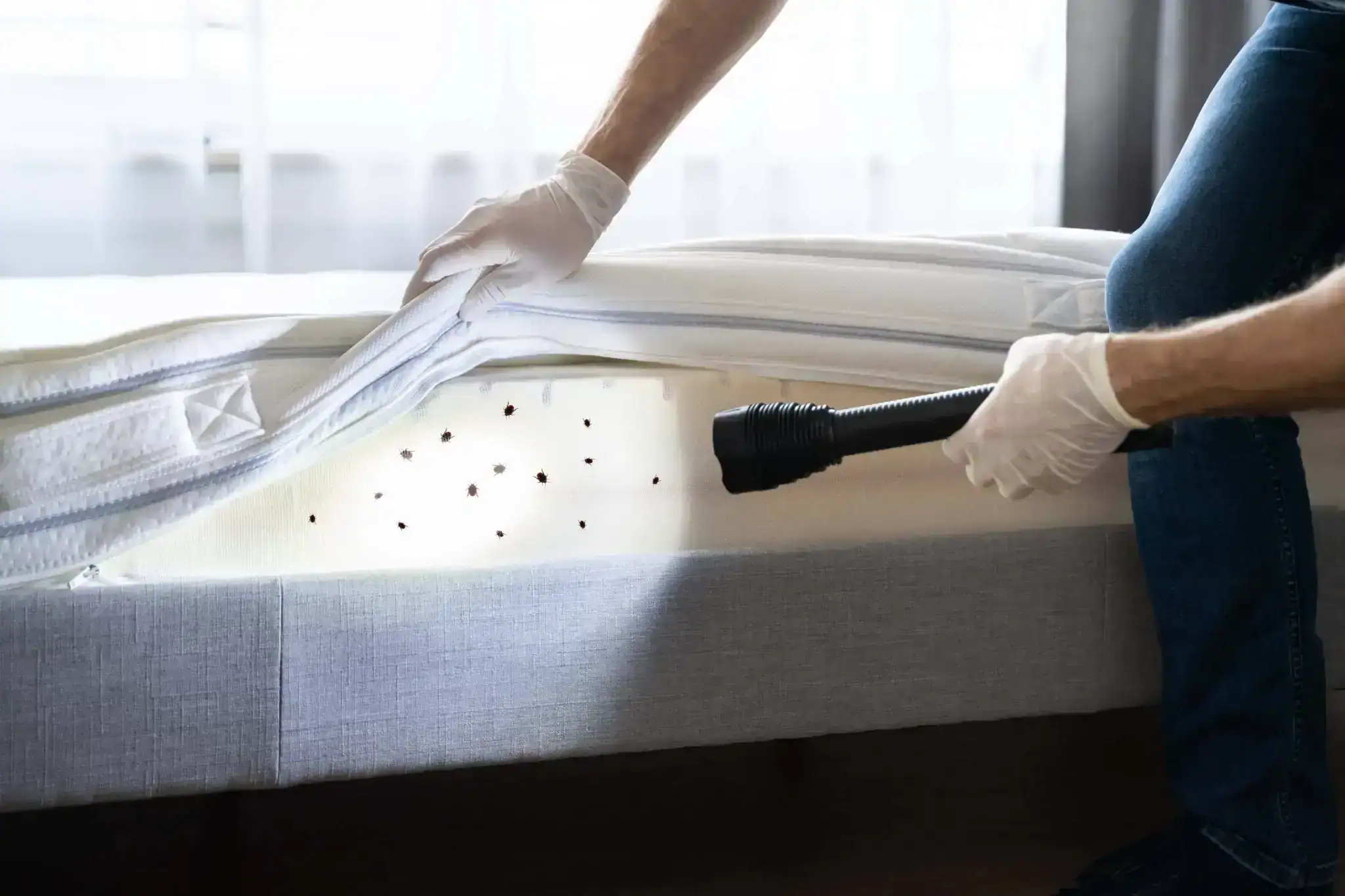
You can see bed bugs with your naked eye, but you have to know what you’re looking for. Adults are reddish-brown, oval-shaped, and about the size of an apple seed. Before they feed, they’re flat. After a blood meal, they swell up and become more elongated.
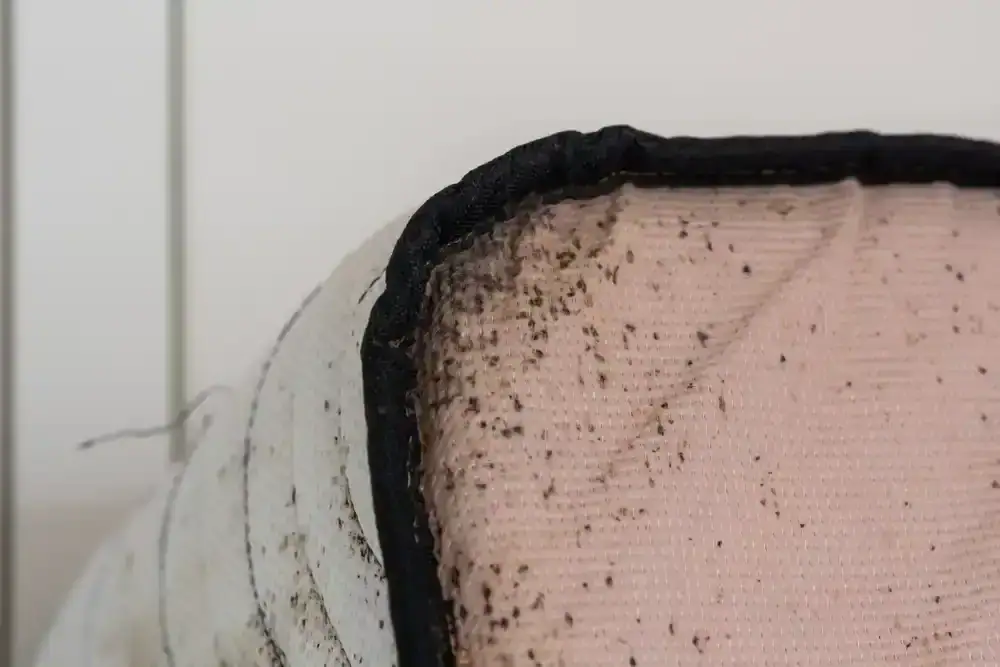
But you’re not always going to see the bugs themselves. Often, the evidence shows up first. Look for small rust-colored stains on sheets or mattresses—that’s dried blood from their feeding. Dark spots that look like someone dotted the fabric with a marker are bed bug droppings. You might also spot tiny white eggs about the size of a pinhead, or pale yellow shed skins that bed bugs leave behind as they grow.
Where do they hide? Bed bugs are experts at tucking themselves into tight spaces. Mattress seams are the most common spot, especially at the corners near the head of the bed. They love the piping along the edges where the fabric is stitched together. Pull back the sheets and use a flashlight to inspect every seam, fold, and crevice.
But don’t stop at the mattress. Check behind the headboard if you can move it or look behind it. Inspect the bed frame, particularly where joints meet and in any cracks or holes. Nightstands, especially the underside and inside drawers, are common hiding spots. Upholstered furniture like chairs or sofas near the bed should get the same treatment—check seams, tufts, and underneath cushions.
Even the luggage rack deserves attention. It’s one of the most overlooked spots, but bed bugs hang out there because that’s where travelers set their bags. If someone before you had bed bugs, there’s a chance they left a few behind on that rack.
The key is to be methodical. You’re not tearing the room apart, but you are taking five to ten minutes to check the places bed bugs are most likely to be. That small investment of time could save you months of headaches.
Want live answers?
Connect with a First Choice Pest Control expert for fast, friendly support.
The first thing you do when you walk into your hotel room isn’t unpack. It’s inspect. Before your luggage touches the bed or even the floor, you’re doing a quick but thorough check of the room.
Start by putting your suitcase in the bathroom. Bed bugs don’t like hard, smooth surfaces like tile, and bathrooms are generally the safest place to stage your belongings while you inspect. Keep your luggage closed and off the floor if possible—set it in the tub or on the bathroom counter.
Grab your phone and turn on the flashlight. You might also want a credit card or something flat and rigid to help you pry open seams and folds on the mattress. Then start your inspection at the bed.
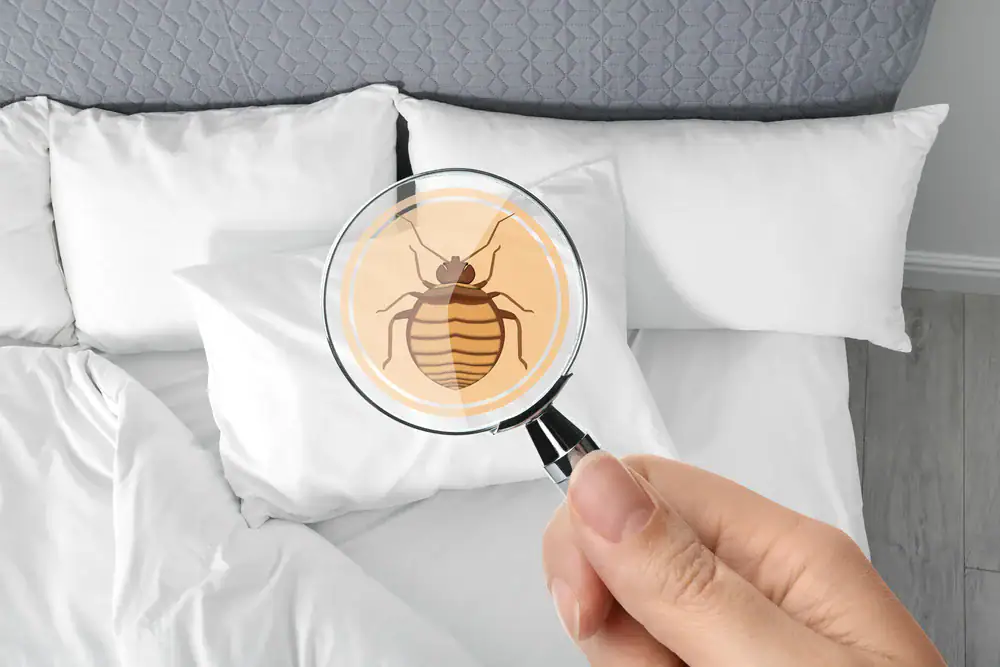
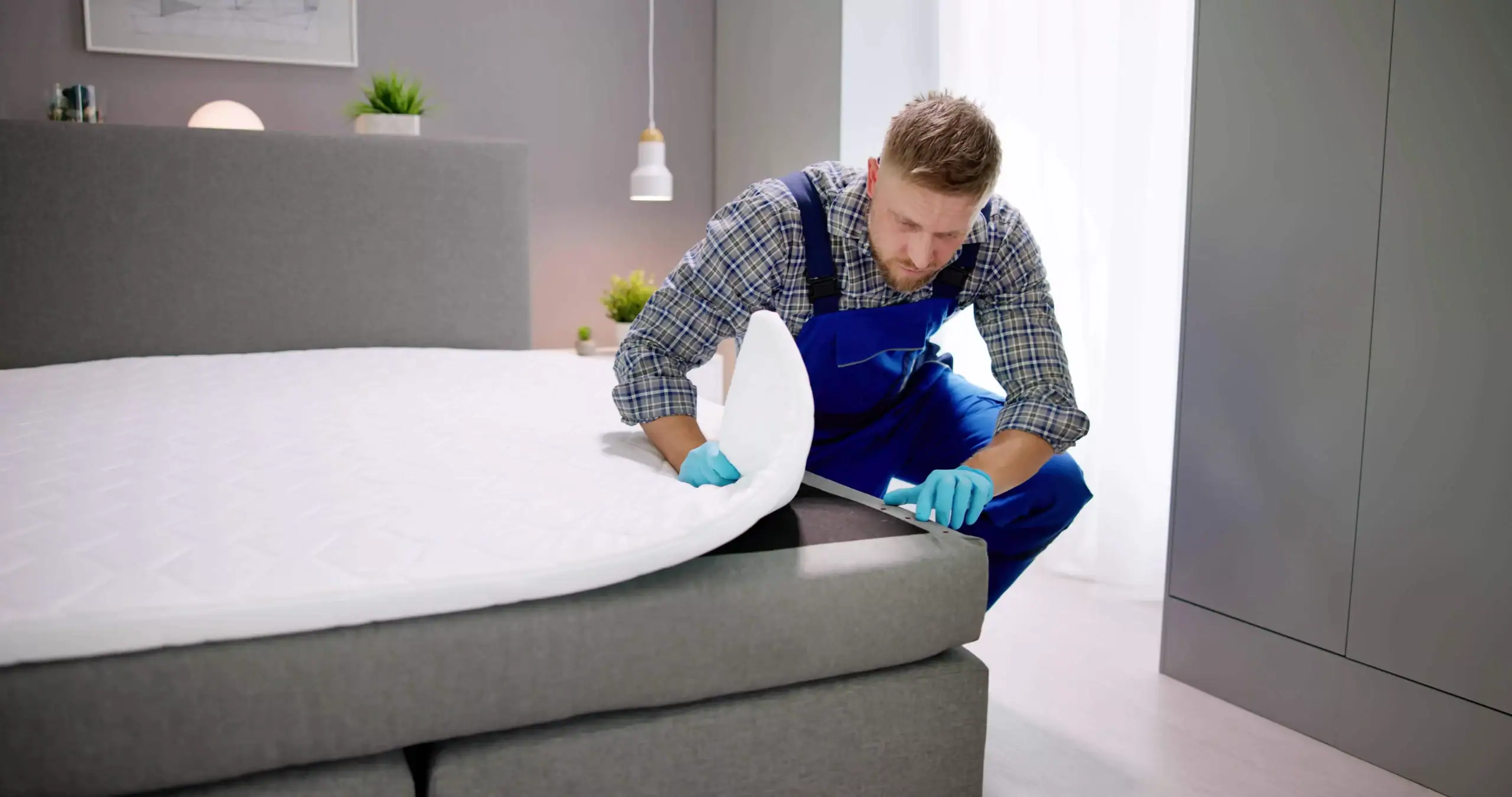
Pull back all the bedding—sheets, blankets, comforter, everything. You want the mattress completely exposed. Start at the head of the bed and work your way around, inspecting every seam and edge. Use your flashlight to look closely at the piping where the fabric is stitched. Use the credit card to gently pull back seams so you can see inside the folds.
Look for any of the signs we talked about earlier: rust-colored stains, dark spots, shed skins, or live bugs. If the mattress has a tag, check around it. Bed bugs love hiding in and around tags because they create a small pocket of space.
Don’t forget the box spring. Flip the mattress if you can, or at least lift it up to inspect the underside and the top of the box spring. Check the corners especially carefully. If there’s a bed skirt, lift it and look at the frame underneath.
Now move to the headboard. If it’s not attached to the wall, pull it away and inspect behind it. Check any crevices, cracks, or design elements where bugs could hide. If the headboard is upholstered, examine the seams and any buttons or tufting.
Next, check the nightstands. Pull out the drawers and inspect the corners and joints. Look underneath the nightstand and along the back where it meets the wall. Bed bugs often hide in furniture near the bed because they don’t like to travel far from their food source.
If there’s upholstered furniture in the room—a chair, sofa, or ottoman—give it the same treatment. Check seams, look under cushions, and inspect the legs and frame. Even the luggage rack deserves a quick look. Run your flashlight along the straps and joints.
This whole process takes maybe ten minutes. It’s not glamorous, and it’s not how you wanted to start your vacation. But it’s the difference between sleeping soundly and bringing home a problem that could take months and thousands of dollars to fix.
If you find anything suspicious—live bugs, stains, shed skins, or eggs—don’t try to tough it out. Take photos of what you found, gather your belongings from the bathroom, and go straight to the front desk. Ask for a different room, and make sure it’s not adjacent to the one you just left or directly above or below it. Bed bugs can travel through walls and tend to spread to the rooms closest to the source.
Even if your inspection comes up clean, you’re not done being careful. How you handle your luggage and belongings during your stay matters just as much as the inspection itself.
Never put your suitcase on the bed. That’s the number one mistake travelers make. The bed is where bed bugs are most likely to be, even if you didn’t spot them during your inspection. Keep your luggage elevated and away from the bed and walls. If the room has a luggage rack, use it—but inspect it first. Metal racks are better than upholstered ones because bed bugs don’t like smooth metal surfaces.
If you don’t trust the luggage rack or there isn’t one, keep your suitcase in the bathroom on a hard surface. It’s not convenient, but it’s safe. Some travelers even keep their luggage in the bathtub for the duration of their stay.
Don’t use the dresser drawers or hang clothes in the closet if you can avoid it. Bed bugs can hide in furniture, and you’re giving them easy access to your clothing. If you need to unpack, consider keeping clothes in sealed plastic bags inside your suitcase. It’s an extra layer of protection that makes it much harder for bed bugs to hitch a ride.
Keep dirty laundry separate and sealed. There’s research showing bed bugs are more attracted to worn clothing than clean clothes, probably because of the residual scent. Use a plastic bag to contain dirty clothes, seal it tight, and don’t let it sit on the floor or bed.
At night, keep your suitcase closed and zipped. Don’t leave it open with clothes spilling out. The more barriers you create, the harder it is for bed bugs to get into your belongings.
And here’s something most people don’t think about: keep your personal items like purses, backpacks, or laptop bags off the floor and bed too. Bed bugs don’t discriminate. If it’s fabric and it’s accessible, they’ll crawl into it.
These precautions might feel excessive, especially if your room looked clean during your inspection. But bed bugs are small, sneaky, and patient. They can hide in places you didn’t check or didn’t see. Taking these steps doesn’t guarantee you won’t encounter bed bugs, but it dramatically reduces the chances they’ll make it into your luggage and follow you home.
Your trip is over, you’re pulling into the driveway, and you’re ready to unpack and relax. Not yet. The final step in preventing bed bugs happens when you get home, and it’s just as important as everything you did at the hotel.
Don’t bring your luggage straight into your bedroom. Unpack in the garage, laundry room, or even outside if the weather allows it. Anywhere but your bedroom. Open your suitcase and inspect it carefully one more time. Check the seams, zippers, pockets, and any folds in the fabric.
Take everything that can be washed and put it directly into the washing machine. And here’s the key: wash it on the hottest setting the fabric can handle, then dry it on high heat for at least 30 minutes. The heat is what kills bed bugs and their eggs. Washing alone won’t do it. The dryer is your best defense.
Even clothes you didn’t wear should go through this process. Bed bugs don’t care if the shirt is clean—they just want a ride. Once everything is washed and dried, put it in clean sealed bags before bringing it into your bedroom.
For your luggage, vacuum it thoroughly inside and out. Pay special attention to seams, corners, pockets, and any crevices. When you’re done, immediately take the vacuum bag or canister outside, seal the contents in a plastic bag, and dispose of it in an outdoor trash can. If you have a handheld steamer, even better—steam treatment kills bed bugs on contact and gets into places a vacuum might miss.
Store your luggage somewhere away from your bedroom. A garage, basement, or storage closet is ideal. Never store suitcases under your bed. If bed bugs did make it into your luggage, storing it away from where you sleep gives you time to notice them before they spread.
If you suspect you might have brought bed bugs home despite your precautions, don’t wait. The sooner you address it, the easier and less expensive it is to eliminate them. We offer canine bed bug detection—one of fewer than 100 companies in the U.S. with this specialized service. Our trained detection dogs can find bed bugs in early stages when treatment is most effective.
Travel should be about making memories, not bringing home pests. With these strategies, you can protect your home and your peace of mind.
Article details:
Share:
Continue learning: