In-Depth Guides for Smarter Pest Control Decisions
Discover why professional hornet removal is essential for Swartz Creek homeowners this summer and how to protect your family safely.
Share:
Summary:
Hornets are far more aggressive than bees and pose a real risk with their venomous stings. Thousands of people die every year in the United States due to allergic reactions to hornets and wasps. Unlike bees that sting once and die, hornets can sting repeatedly, injecting more venom with each attack.
Hornet stings contain more venom than other stinging insects, increasing the risk of severe allergic reactions and making them particularly hazardous for people with allergies. Even if you’ve never had an allergic reaction before, multiple stings can overwhelm your system.
Michigan’s most common species, the bald-faced hornet, is considered the state’s most aggressive stinging insect and will often attack with minimal provocation. When they feel threatened, they release alarm pheromones that signal other hornets to join the attack.
Michigan’s hornet season peaks in August when colonies become most aggressive as they reach their largest size. This timing couldn’t be worse—it’s exactly when Swartz Creek families want to spend the most time outdoors.
During late summer, hornet colonies can contain hundreds or even thousands of individuals. By August, queens stop producing larvae, so adult workers shift from hunting insects to aggressively scavenging for sweet food sources. This behavior change brings them into direct conflict with outdoor activities like barbecues, pool parties, and children playing in yards.
Hornets show high levels of aggression, especially in late summer and fall as colonies reach their largest size. What might have been a manageable problem in spring becomes a serious safety hazard by midsummer. The combination of larger populations, increased aggression, and peak outdoor activity creates a perfect storm for dangerous encounters.
Temperature plays a role too. Hornets are highly active in late summer heat, especially near homes and food sources. They’re drawn to the same outdoor spaces your family uses for relaxation and recreation. A nest that seemed harmless in May can threaten your ability to safely use your own backyard by August.
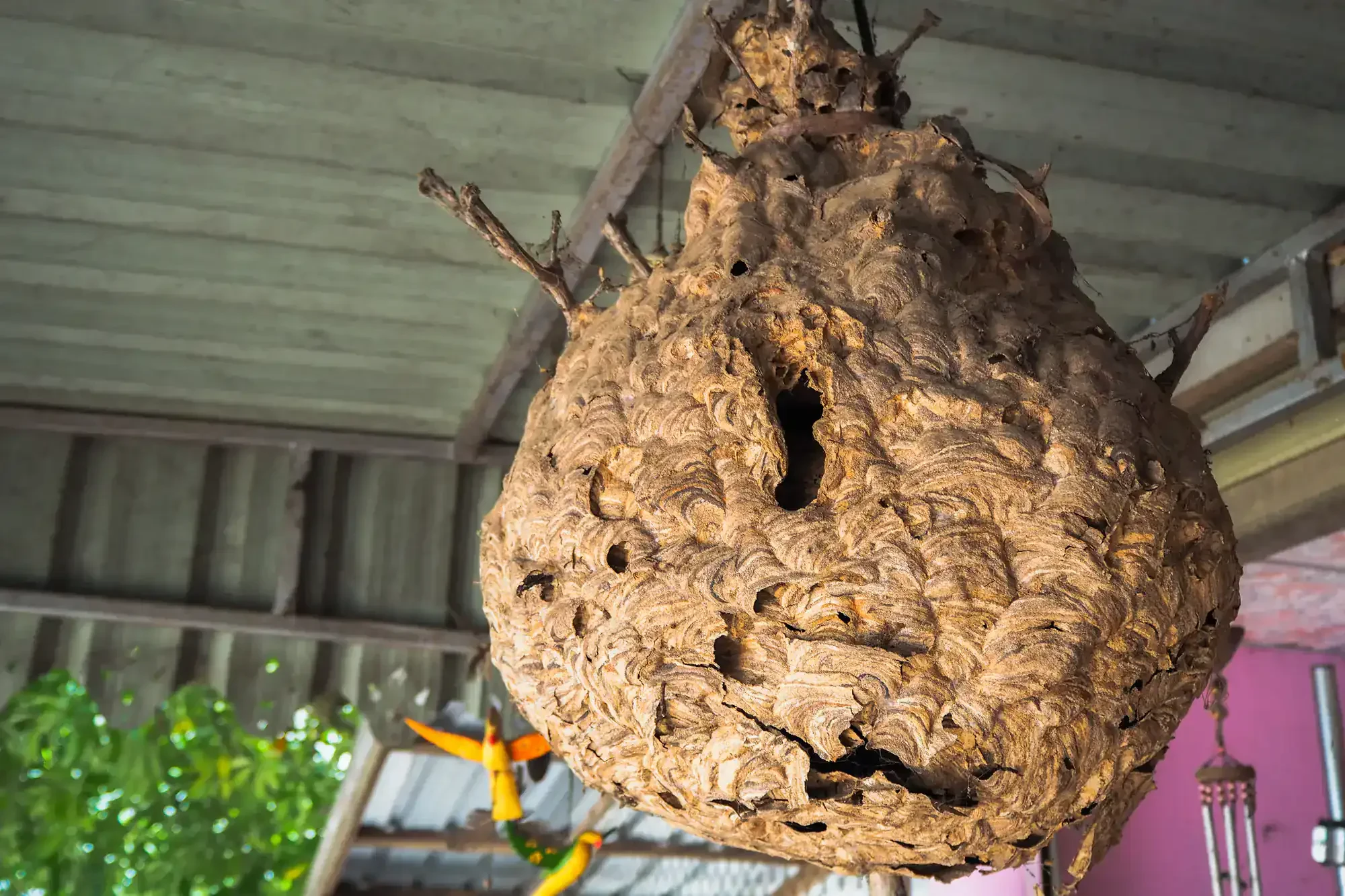
The location of nests makes the problem worse. Hornets often build in quiet, undisturbed areas like under eaves, porch railings, and inside sheds—exactly the places you might encounter them unexpectedly while doing yard work or maintenance.
Hornets and yellow jackets often build nests in hidden areas, making professional inspections essential, with even small nests containing dozens or sometimes hundreds of wasps. You might not realize you have a problem until someone gets stung or you accidentally disturb a nest during routine activities.
Common hiding spots around Swartz Creek homes include wall voids, attics, underground locations, and inside hollow trees. European hornets, Michigan’s only true hornet species, prefer nesting in tree hollows, wall voids, or quiet attics. These concealed locations mean you could be living with a dangerous nest for weeks without knowing it.
The discovery often happens at the worst possible moment. Ground-nesting yellow jackets are frequently discovered while mowing lawns or weeding gardens, with vibrations from equipment irritating the wasps and stimulating defensive responses. What should be routine yard maintenance becomes a medical emergency.
If nests are inside walls or attics, sealing them off creates additional problems as trapped hornets may chew through walls searching for exits. This property damage adds insult to injury, literally. Professional identification and treatment prevent these cascading problems.
Wall voids present particular challenges because some species like German yellowjackets nest inside buildings, attics, and walls, often going unnoticed until there’s an infestation or someone gets stung indoors. Indoor stings are especially dangerous because there’s no immediate escape route if the insects become aggressive.
Want live answers?
Connect with a First Choice Pest Control expert for fast, friendly support.
Removing a wasp nest on your own is not recommended as nests contain more stinging insects than you think, which can be very dangerous, making professional exterminator help the best approach. Store-bought sprays and home remedies create a false sense of security that often leads to painful consequences.
Hornets aggressively defend their homes and can sting multiple times, potentially causing mass envenomation that leads to severe reactions or even death. The products available to homeowners simply aren’t designed for the aggressive defense response that hornet colonies mount when threatened.
When hornets feel threatened, they become aggressive, making DIY methods dangerous and ineffective. That spray can with a 10-foot reach isn’t nearly enough distance when you’re dealing with insects that can fly 25 mph and coordinate group attacks.
Professional pest control technicians have the necessary training, experience, and equipment to safely remove hornet nests using protective clothing, specialized insecticides, and techniques to minimize risks. The difference between professional and consumer-grade equipment is literally life and death.
Professional-grade protective suits are designed to prevent stings even during aggressive encounters. Proper protective clothing includes beekeeping suits or thick, long-sleeved clothing, gloves, hats, and face masks with all openings sealed to prevent hornets from getting inside. Consumer versions of protective gear often have gaps or weak points that hornets can exploit.
Professional treatments use electronically calibrated equipment to apply safe and effective control materials directly to nesting sites, combining liquid and dust treatments to penetrate colonies and reach even hard-to-access nests. This precision application ensures complete elimination while minimizing environmental impact.
The timing and approach matter too. Professional removal is best done at night when hornets are less active. Most homeowners don’t realize this critical timing factor, attempting removal during peak activity periods when hornets are most aggressive and alert.
Inexperienced individuals attempting removal face higher risks of multiple stings leading to severe pain, swelling, and potentially life-threatening allergic reactions requiring immediate medical attention. Professionals have protocols for handling stings and emergency response procedures that homeowners lack.
Store-bought sprays don’t reach deep into larger infestations, and disturbing nests can cause them to tumble inside homes, with incomplete removal potentially resulting in serious injury, property damage, or reinfestation. What appears to be successful treatment often just scatters the problem.
Professional service includes sealing gaps, cracks, and crevices where hornets might rebuild, providing a physical barrier that blocks future infestations and ensures properties remain protected from stinging pests regardless of season. This preventive approach addresses the root cause rather than just symptoms.
Professional treatment also includes follow-up monitoring. Treatments eliminate current infestations and prevent future ones, though new colonies can form over time, making regular inspections and maintenance crucial for keeping properties wasp-free. This ongoing protection is impossible to achieve with DIY approaches.
The elimination process requires understanding hornet biology and behavior. Professional methods target both insects and their nests to prevent future infestations while ensuring family and pet safety. Incomplete treatment leaves reproductive individuals that can restart colonies nearby.
Professional treatment includes dusting void areas with insecticides that continue killing emerging hornets for six months or more, plus residual liquid treatments that prevent future nest construction. This comprehensive approach ensures long-term protection that DIY methods cannot match.
When hornets threaten your family’s safety, you need experienced professionals who understand both the insects and your local environment. We bring years of experience serving Southeast Michigan and understand the behavior of wasps, hornets, and yellow jackets in the region.
Our approach combines immediate threat elimination with long-term prevention, using methods that protect your family while respecting beneficial insects in your ecosystem. We use safe methods to protect pollinators like honey bees while eliminating threats from dangerous stinging insects.
Don’t let hornets control your summer. When you need safe, effective hornet removal that protects your family and property, First Choice Pest Control brings the experience and equipment necessary to handle even the most challenging situations. Our team understands Swartz Creek’s unique pest challenges and has the local knowledge to keep your home safe all season long.
Article details:
Share:
Continue learning: