In-Depth Guides for Smarter Pest Control Decisions
Hornet nests grow from golf ball to basketball size in just months. Timing your removal correctly means fewer hornets, lower risk, and permanent results.
Share:
Summary:
Spring marks the start of hornet season across Genesee County and Shiawassee County. Queen hornets emerge from winter hibernation in April and May, searching for protected spots to establish new colonies. During these early weeks, you’re dealing with a single queen and maybe a handful of workers—not the hundreds you’ll face by August.
The nests stay small through late spring. You’re looking at golf ball to softball-sized structures. The colony hasn’t built up its defensive workforce yet, making this your easiest window for safe removal.
By early summer—June through mid-July—nests have grown but remain manageable. You might encounter 20 to 50 workers instead of hundreds. The colony focuses on building and feeding larvae rather than defending against threats with the intensity you’ll see during late summer.
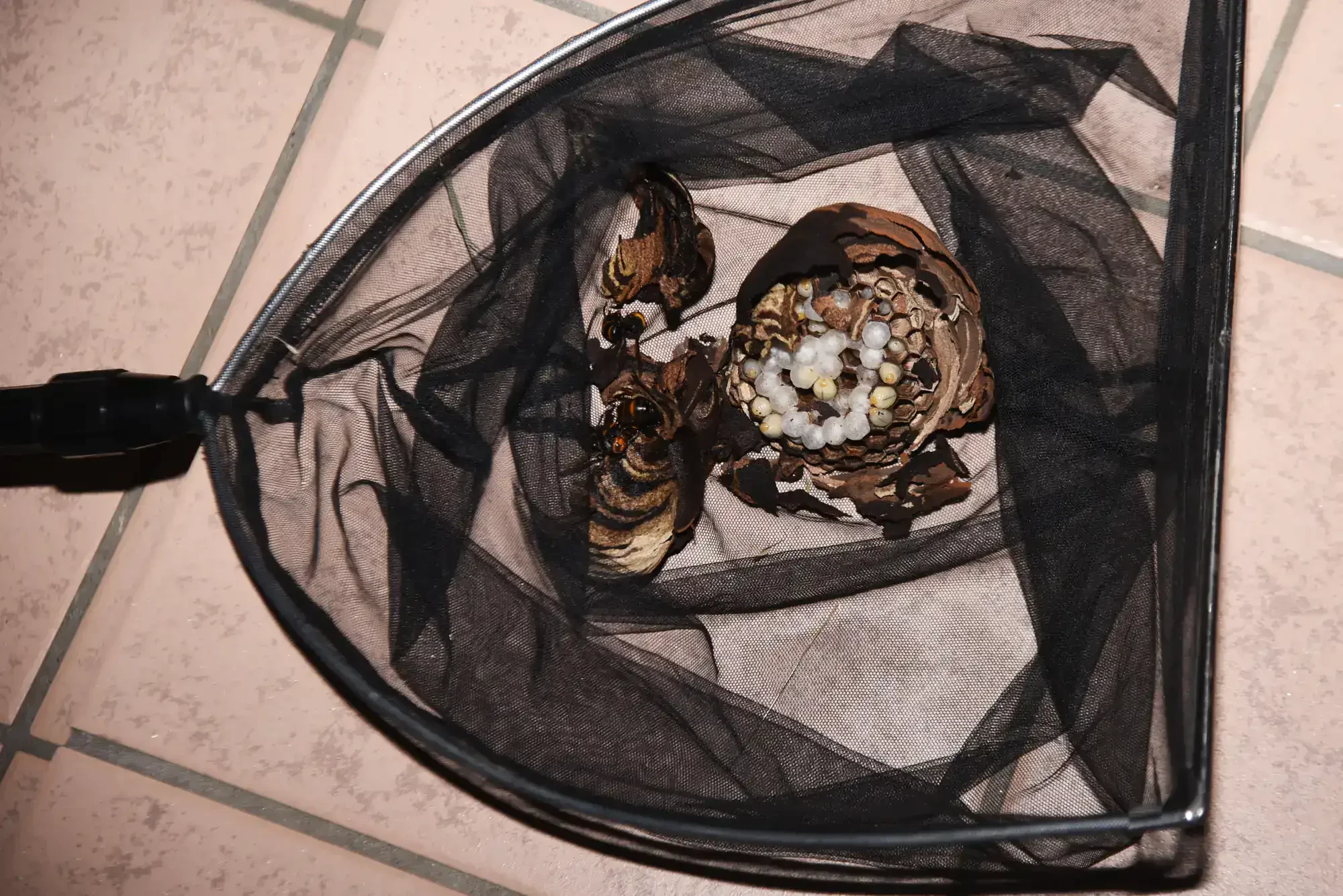
Early season removal works in your favor for several practical reasons. The smaller worker population means fewer hornets to contend with during extraction. A nest housing 20 workers presents far less danger than one with 400 aggressive defenders ready to swarm.
Temperature plays a role too. Cooler spring temperatures keep hornets less active compared to August heat. They respond more slowly to disturbances, creating a safer working window whether you’re attempting DIY removal or waiting for a professional.
Nest location matters at this stage. In spring, you can often spot nests before they’re built into difficult spaces. A queen might start construction under an eave where you can easily reach it. Wait until August, and that same nest has expanded into your attic or wall void, requiring professional extraction with specialized equipment and possibly cutting into your home’s structure.
The physical advantage is real. Early nests haven’t developed the thick, multi-layered paper walls you see in mature colonies. The nest material is thinner, easier to treat with insecticides, and simpler to remove completely. You’re not wrestling with basketball-sized structures that require careful dismantling to avoid triggering a defensive swarm.
Cost considerations favor early action. Professional hornet removal for a small spring nest typically runs $100 to $300 in Michigan. That same nest in August, when it’s grown to full size with hundreds of workers, can cost $500 to $800 for safe extraction. The job takes less time in spring, requires less product, and carries lower risk.
Most importantly, early removal prevents escalation. Once you eliminate a small nest in May or June, you’ve stopped the colony before it reaches peak aggression. You won’t spend the rest of summer worrying about kids or pets accidentally disturbing an active nest near your deck or swing set.
Regular property inspections in April and May catch nests when they’re easiest to handle. Walk your property’s perimeter weekly, checking common nesting sites around your Genesee County or Shiawassee County home. Look under eaves, inside sheds, around deck railings, in tree branches near the house, and along rooflines.
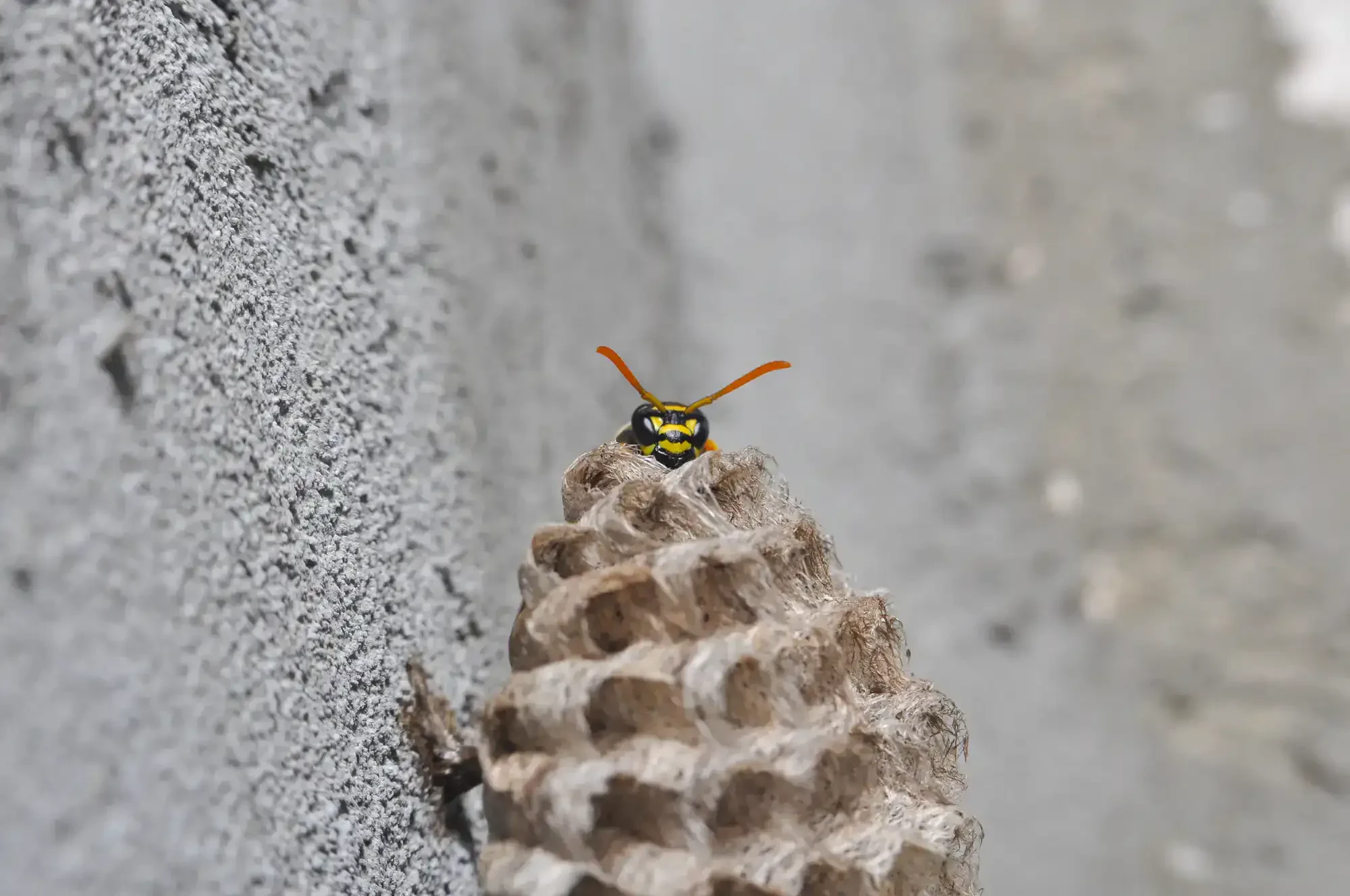
Hornet nests start as small, gray, papery structures. In early stages, they might look like an upside-down umbrella or a small cone attached to a surface. Bald-faced hornets—the most common species in Michigan—build enclosed nests that expand dramatically through summer. European hornets prefer hidden locations like wall voids, attics, or hollow trees where you won’t spot them until the colony is well-established.
Watch for hornet traffic patterns around your property. If you notice hornets repeatedly flying to the same spot, they’re likely building nearby. Follow their flight path from a safe distance to locate the nest. Spring queens show less aggression than summer workers, but you should still maintain at least ten feet of distance during observation.
Check high-traffic areas first. Hornets often build near human activity without immediate confrontation. You might find nests near outdoor lights (European hornets are attracted to lights at night), under porch ceilings, in garage corners, or tucked into playground equipment. These locations put your family at risk as the colony grows, making early detection critical.
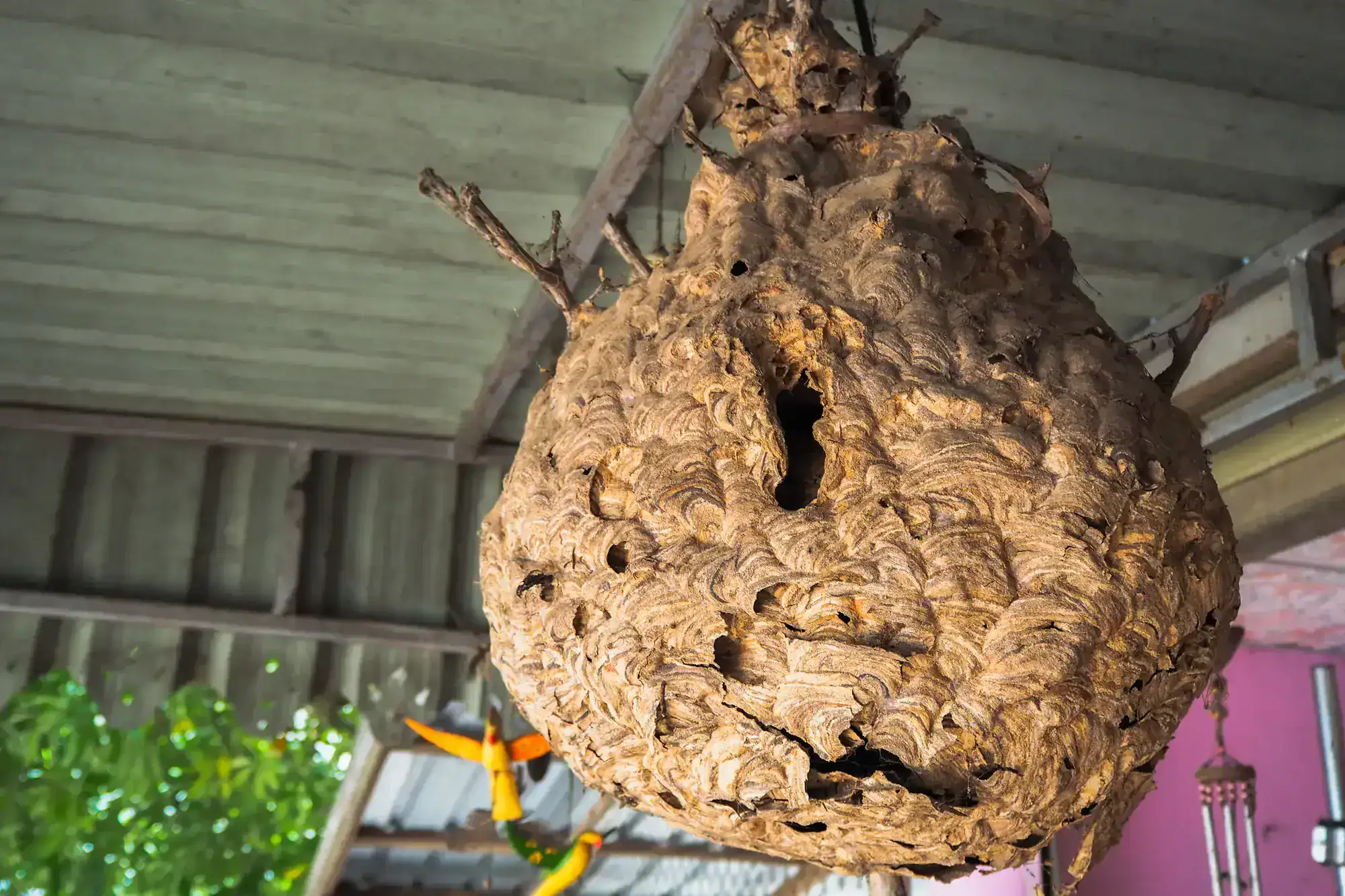
Don’t ignore small nests assuming they’ll stay small. A golf ball-sized nest in May typically reaches basketball size by August. The colony grows exponentially through summer as the queen focuses solely on laying eggs while workers take over nest expansion and defense.
Document what you find. Take photos from a safe distance if you spot a suspected nest. This helps when calling professionals for hornet removal—experienced technicians can often identify the species and provide guidance based on the nest’s appearance and location. Some nests require immediate action while others can wait for optimal treatment timing based on weather and colony development.
Want live answers?
Connect with a First Choice Pest Control expert for fast, friendly support.
August and September represent the most dangerous period for hornet activity across Michigan. Colonies have reached maximum size, often housing 100 to 700 workers depending on species. The nest has expanded to its largest dimensions, and hornet behavior shifts dramatically toward aggressive defense.
Late summer hornets become intensely protective because the colony is raising reproductive hornets—new queens and males that will mate and establish next year’s colonies. Worker hornets defend these reproductives with extreme aggression, attacking perceived threats with minimal provocation.
This is when most stinging incidents occur in Genesee County and Shiawassee County. Homeowners accidentally disturb nests while mowing lawns, trimming shrubs, cleaning gutters, or simply walking near the nest entrance. The hornets swarm within seconds, and unlike bees that die after one sting, hornets can sting repeatedly while pursuing you across your yard.
The sheer number of defenders makes late summer nests genuinely hazardous. Where a spring nest might have 20 workers, an August colony can house 400 or more. When threatened, these workers attack in coordinated groups, releasing alarm pheromones that trigger mass defensive responses from the entire colony.
Hornet venom becomes more potent during peak colony periods. The insects produce higher venom concentrations in late summer, making stings more painful and increasing allergic reaction risks. Multiple stings from an August swarm can require emergency medical attention even for people without known allergies. Michigan emergency rooms see increased hornet sting cases from July through September for this reason.
Nest locations become more complex by late summer. What started as an accessible nest under your eave may have extended into your attic or wall void. Hornets expand their nests throughout summer, sometimes building into hidden spaces you can’t see from outside. Professional hornet removal often requires cutting into walls, removing sections of siding, or accessing tight attic spaces to reach the full structure and eliminate the entire colony.
The hornets’ dietary needs shift in late summer, bringing them into closer contact with humans. Early season hornets hunt insects to feed protein-rich food to developing larvae. Late summer hornets seek sugary substances—soda, fruit, garbage, outdoor drinks—bringing them near patios, picnic areas, and trash bins. This increases encounter frequency right when colonies are most aggressive and defensive.
Weather patterns intensify the problem across Michigan. Hot August days make hornets more active and aggressive than cooler spring temperatures. They’re quicker to respond to disturbances, faster in flight, and more persistent in pursuing perceived threats away from the nest. You might find yourself being chased fifty feet or more from a disturbed late-summer nest.
DIY hornet removal becomes genuinely dangerous during this period. The protective equipment and techniques that might work on a small spring nest prove inadequate for large August colonies. Store-bought aerosol sprays rarely penetrate deep into mature nests, and partial treatments just anger the colony without eliminating it, often making the situation more dangerous than before you attempted treatment.
Fall brings natural decline in hornet activity, but waiting until October or November means living with an active, aggressive nest through the entire peak season. You’ve spent months avoiding sections of your own property, worrying about stings, and dealing with the stress of hundreds of hornets twenty feet from your back door.
The first hard frost in Genesee County and Shiawassee County—typically late October or early November—signals colony die-off. Worker hornets and males die as temperatures consistently drop below 35°F. Only newly mated queens survive, leaving the nest to find protected hibernation spots in leaf litter, under bark, or in wall voids. After this frost, the nest becomes inactive and safe to remove without protective equipment or treatment.
However, fall removal doesn’t prevent next year’s hornet problem. Those queens that left your property in October will start new nests next spring, possibly in the same favorable location if conditions remain attractive. Removing the old nest doesn’t address the new queens already hibernating in protected spots around your property.
Some homeowners choose to wait for winter removal specifically because it eliminates all risk. If the nest isn’t near high-traffic areas and doesn’t pose immediate danger, waiting for natural die-off makes sense. You can remove the abandoned nest in December or January with zero risk of stings—just physical removal of the empty structure.
The downside is months of restricted property use during Michigan’s best outdoor weather. If the nest sits near your deck, playground, garden, or frequently used entrance, waiting until winter means avoiding that area all summer and fall. For families with children or pets, this isn’t practical or safe. You’re essentially giving up part of your property for an entire season.
Weather can also destroy fall nests before you remove them. Michigan’s harsh winter weather—snow, ice, wind—breaks down the paper-like nest material. By spring, the nest may be partially deteriorated or knocked down entirely, but the location remains attractive to new queens scouting nest sites. You might find a brand new nest built in the exact same spot the following May.
Professional hornet removal in fall costs similarly to summer removal if the nest remains active. Once the colony has died off after the first hard frost, some pest control companies charge less for simple nest removal since there’s no treatment required—just physical extraction and disposal of the abandoned structure. Others maintain consistent pricing regardless of season.
Certain situations require professional expertise regardless of what season you’re in. Nests larger than a softball, located in hard-to-reach areas like second-story eaves or inside wall voids, or positioned near high-traffic zones should be handled by experienced technicians. The risk of incomplete removal, personal injury, or property damage outweighs any cost savings from DIY attempts.
We’ve handled Michigan’s hornet species for 26 years, understanding the seasonal patterns and behavioral differences that make timing critical for safe removal. The same experienced technician who assesses your Genesee County or Shiawassee County property can provide honest guidance on whether immediate removal is necessary or if waiting for a safer window makes sense for your specific situation.
The goal isn’t just removing the current nest—it’s protecting your property long-term and giving you back safe use of your outdoor spaces without anxiety. Whether you’re dealing with a small spring nest that just appeared or a large late-summer colony that’s been growing for months, professional removal eliminates the problem completely while keeping your family safe from hundreds of aggressive defenders.
Article details:
Share:
Continue learning: