In-Depth Guides for Smarter Pest Control Decisions
Confused about what's buzzing around your Michigan yard? Our expert guide helps you identify wasps, hornets, and yellow jackets—plus when to call for professional removal.
Share:

Summary:
Most people see yellow and black stripes and assume they’re dealing with the same pest. That’s a dangerous mistake. The most common yellow jackets in Michigan are the German yellow jacket, Bald-faced hornet, and Eastern yellow jacket—and yes, the “Bald-faced hornet” is actually a yellow jacket species despite its name.
European hornets are the only true hornets in Michigan, with many wasps including bald-faced hornets commonly mistaken for true hornets by homeowners. Understanding these differences isn’t just academic—it determines how aggressive they’ll be and what removal approach will actually work.
Each species has distinct behaviors, nesting preferences, and threat levels. Getting the identification wrong could mean the difference between a successful DIY solution and a trip to the hospital.
Yellow jackets are the smallest at ½” in length, but don’t let their size fool you. These are Michigan’s most aggressive stinging insects, and their stings are the deadliest because they may cause blood poisoning from bacteria on their stingers.
The eastern yellow jacket builds underground nests and becomes a serious nuisance during Michigan’s fall months. This social wasp is compact and black with bold yellow stripes. Unlike honeybees and bumblebees, they are not pollinators.
Yellow jacket nests are enclosed and found below ground. When they fly, yellow jackets tuck their legs into their bodies. This creates a streamlined appearance that’s distinctly different from other species.
The German yellow jacket presents additional challenges. This invasive species often nests inside buildings, attics, walls, and even outdoor grills. These wasps are easily provoked and commonly found in suburban areas.
What makes yellow jackets particularly dangerous is their ground-nesting behavior. Eastern yellow jackets build hives in natural depressions or old rodent burrows, expanding by digging through soil around the original tunnel. This creates natural sinkholes 1-2 feet deep and wide. If stepped on, the burrow collapses, resulting in an eruption of yellow jackets swarming the surprised victim.
You’ll often encounter them around food sources. They gravitate toward crumbs and spills from drinks, making outdoor dining particularly risky. Yellow jackets are particularly aggressive in late summer and fall, precisely when families want to enjoy their yards most.
The European hornet is the only true hornet species in Michigan. It’s larger than most native wasps, measuring up to 1.5 inches. You’ll recognize it by its yellow-striped abdomen, long antennae, and reddish thorax.
European hornets are most active at dusk and scavenge for food, especially near lights. They prefer nesting inside tree hollows, wall voids, or quiet attics, feeding their larvae a diet of chewed insects. Unlike other social wasps, they overwinter in protected areas, allowing queens to start colonies the following spring.
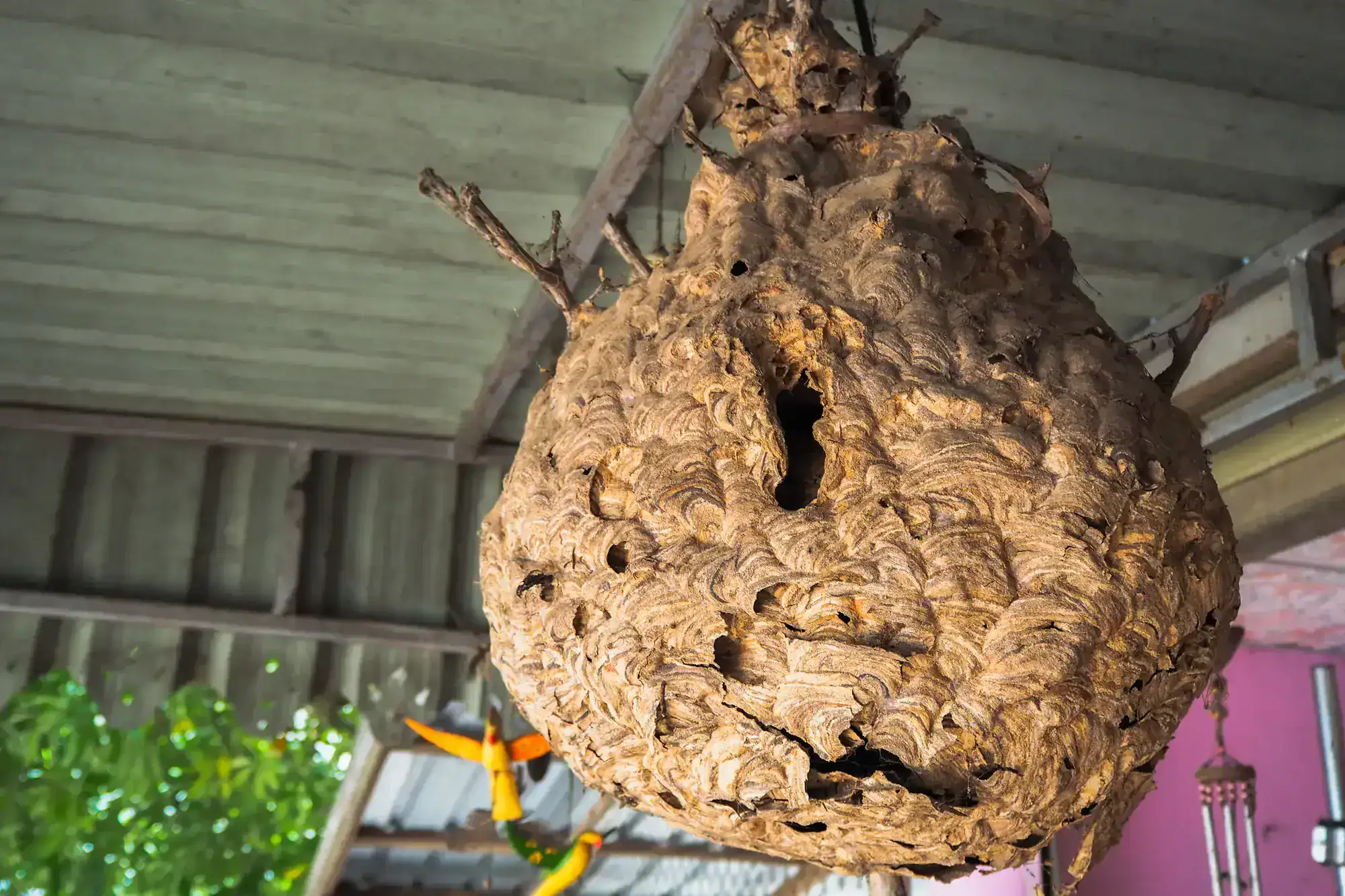
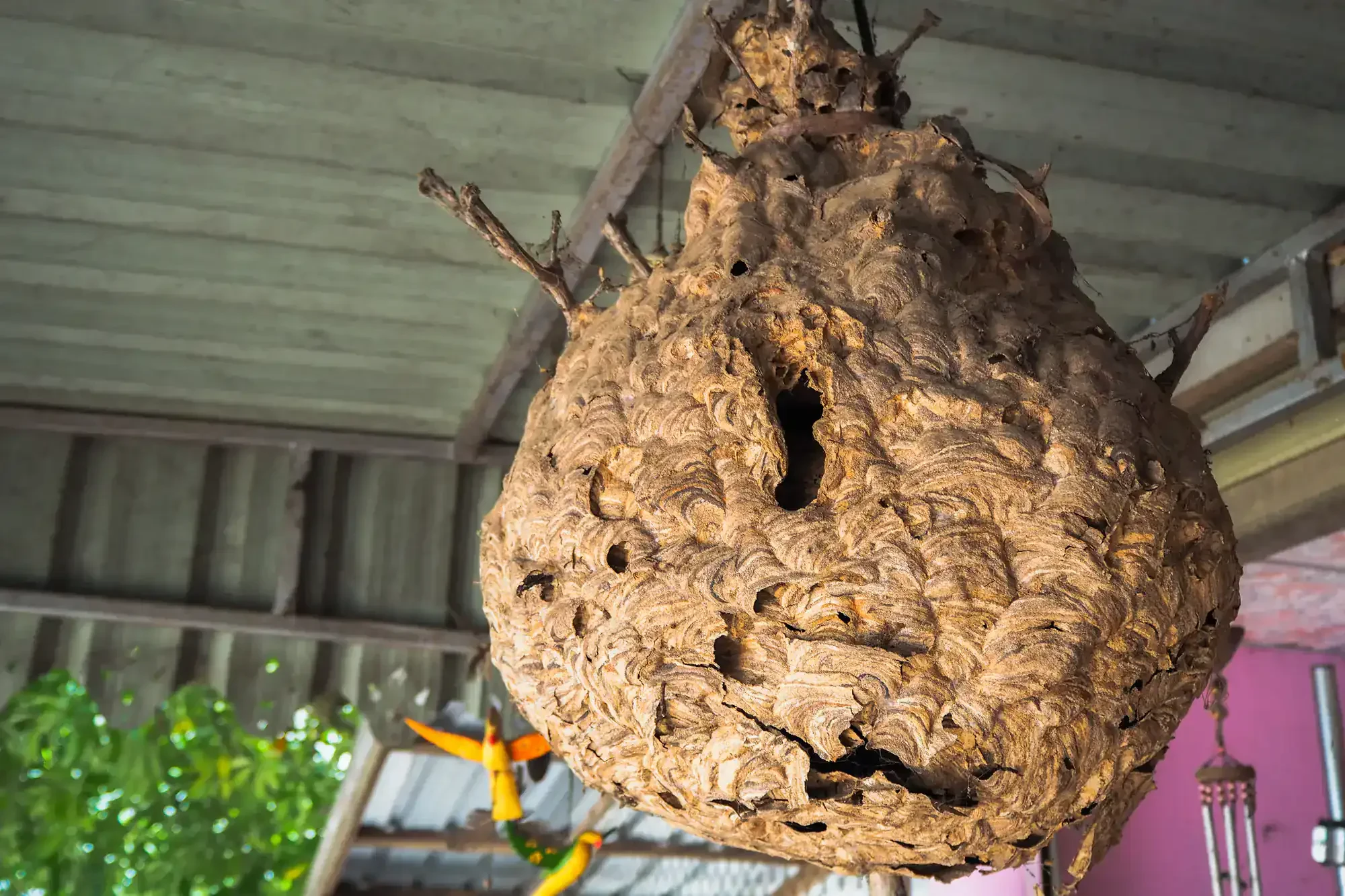
The confusion comes from the so-called “Bald-faced hornet.” Technically a yellow jacket, the bald-faced hornet is still widely referred to as a hornet. These insects are known for their football-shaped nests, often hanging from trees, overhangs, or rooflines. Their striking white markings and aggressive nature make them one of the more feared stinging insects in Michigan. They chew wood fibers to construct paper-like nests, which they defend fiercely.
Bald-faced hornets are about ¾” long with black bodies and gray bands. Despite its name, the bald-faced hornet is more closely related to the yellow jacket than the less common European hornet.
The bald-faced hornet is Michigan’s most aggressive stinging insect. They’re identified by white patterns on their faces and measure about 3/4 inch. Their paper-like nests can grow to extreme sizes, sometimes larger than a basketball. Bald-faced hornets are more aggressive than wasps or yellow jackets and often sting without much provocation.
Hornets have massive, enclosed nests that hang from sturdy perches like tree branches. Hornet colonies contain over 100 wasps. The size and location of these nests make professional removal essential—attempting DIY removal on a basketball-sized nest 20 feet off the ground is asking for trouble.
Want live answers?
Connect with a First Choice Pest Control expert for fast, friendly support.
The most common wasps in Michigan are the common paper wasp and European paper wasp. Wasps are approximately 1″ long, black flying insects with bright yellow markings along their bodies. Common and European paper wasps belong to the Polistinae subfamily of wasps.
Paper wasps are about 1″ long, have long legs, and range in color from reddish-orange to black, sometimes with yellow highlights. They build umbrella-shaped nests often suspended from eaves or window casings. Paper wasp colonies number fewer than 100 wasps. When they fly, their long legs dangle.
Paper wasps are not very aggressive, but they will defend their nest from perceived threats. This makes them somewhat predictable—leave them alone, and they’ll typically leave you alone.
Paper wasps get their name from the paper-like appearance of their colony nests. The wasps build nests by chewing up wood into paper-like pulp and molding it. Paper wasps tend to stick their nests to existing structures such as roofing overhangs or tree branches.
Wasps build nests in May and June. Taking preventive steps during this time can prevent them from nesting on your home. Early intervention is always easier and less expensive than dealing with established colonies.
Colonies become most active in late summer and early fall, which is their mating season. This timing coincides with when families want to spend the most time outdoors, creating potential conflict situations.
The European paper wasp is slender with long legs and a distinct back. These wasps are a growing presence across Michigan, building nests under eaves, inside light fixtures, and even in outdoor furniture. They are less aggressive than hornets but still capable of stinging if disturbed.
Understanding their preferred nesting locations helps with both identification and prevention. Paper wasps frequently build nests on ceilings and overhangs, often choosing corner spots where their nests will be protected. They also favor weathered wood.
The relatively small colony size makes paper wasp removal more manageable than dealing with massive yellow jacket or hornet colonies. However, their preference for building near human activity areas—under decks, in outdoor furniture, around doorways—means encounters are common.
Unlike honeybees, paper wasps don’t leave their stinger behind when they sting, so they can inflict repeated stings. They are a danger to anyone who may come into contact with them, especially those allergic to their venom.
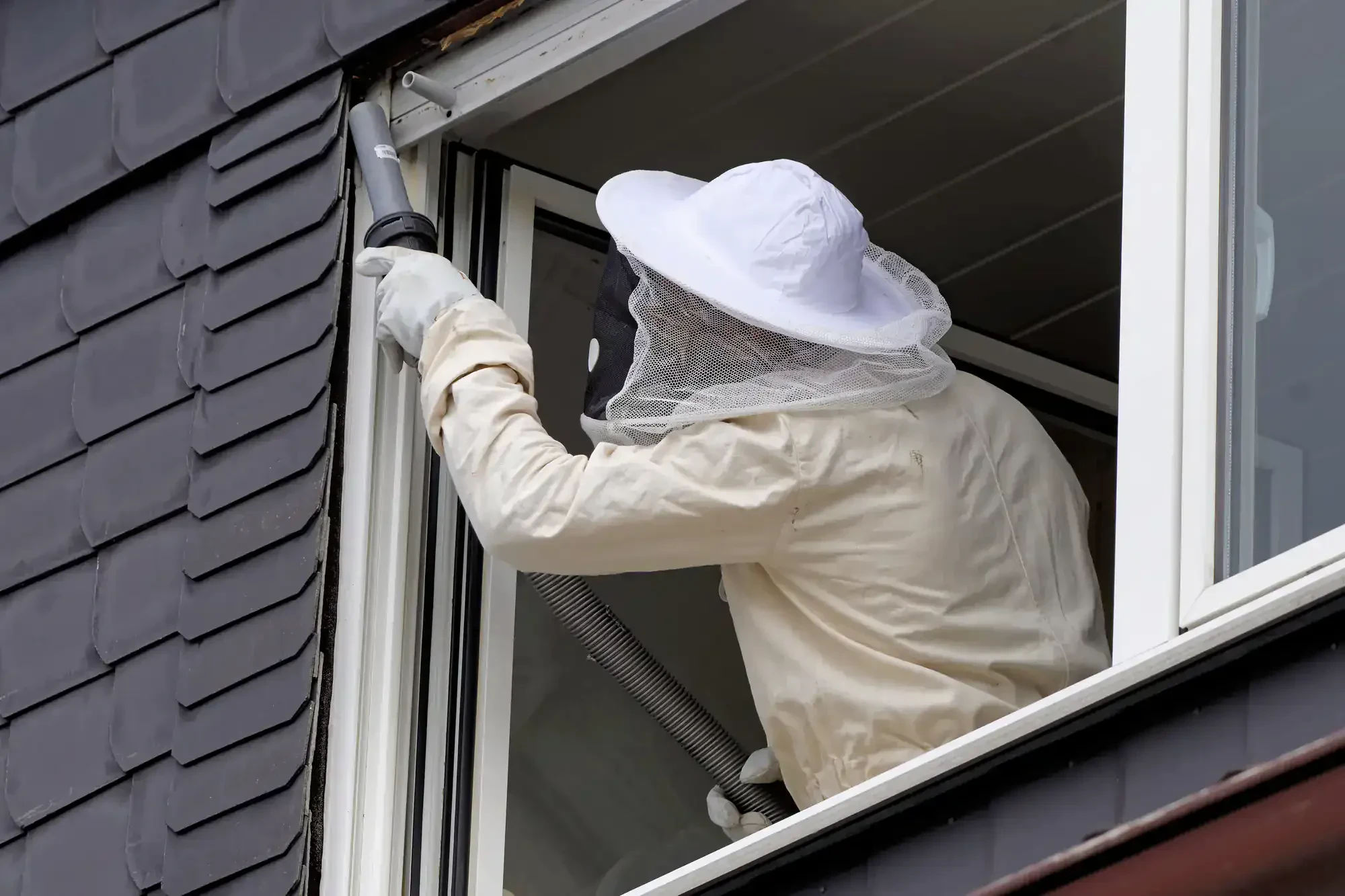
Even small nests can hold dozens—sometimes hundreds—of wasps. Attempting removal without training can lead to injury. We have the proper gear and techniques to remove nests and ensure all larvae and adult wasps are gone.
Yellow jackets and hornets are generally much more aggressive than bees and pose a real risk to humans with their venomous stings. Thousands of people are killed every year in the United States due to allergic reactions to hornets and wasps.
Several situations demand immediate professional intervention. We treat stinging insect emergencies as priority calls because of immediate danger to families. Most emergency calls receive same-day or next-day service. We carry specialized equipment for treating aerial nests and ground-dwelling yellow jacket colonies safely.
If you hear buzzing or tapping sounds inside your home’s walls, especially around windows or ceilings, that could indicate yellow jackets or other species building inside. When it comes to wasp sting risks, especially for people with sensitivities or children playing outside, calling us isn’t just safer—it’s smarter.
It’s not as easy to get rid of wasp nests as most people think. People often try dangerous DIY projects, spraying nests with bleach, insecticide, water, gasoline, and dangerous chemicals. None of those methods permanently eliminate wasps and only put homeowners in immediate danger of being swarmed. Improper yellow jacket nest removal can land someone in the hospital because that species tends to be aggressive and attacks humans without provocation.
Professional wasp exterminator services typically cost between $100 and $1,300, with most homeowners paying around $375. The price depends on the wasp species, nest location, and severity of the infestation. Emergency services cost more, starting at $150-$350, with extra fees for night work.
The investment in professional removal becomes even more justified when you consider the alternative. A wasp nest near your home can be risky, and trying to remove it yourself is not safe. Different wasps build nests in different places, and knowing the type helps determine what to do. Sealing off a nest too soon can backfire, so let us handle removal and check for safety.
Identifying whether you’re dealing with wasps, hornets, or yellow jackets isn’t just about satisfying curiosity—it’s about protecting your family from potentially life-threatening encounters. Michigan’s most aggressive stinging insects can cause blood poisoning from bacteria-laced stingers, and thousands of Americans die annually from allergic reactions to hornet and wasp stings.
If you’re noticing more wasps around your home during late summer in Michigan, you’re not alone. This is when they are most active and more likely to sting if they feel threatened. Whether it’s a nest tucked under your eaves or wasps buzzing around your landscaping, knowing how to handle them safely is important.
Don’t risk your family’s safety with DIY removal attempts. Aggressive species like bald-faced hornets require professional removal because they attack with little provocation and can sting repeatedly. DIY attempts often make the situation more dangerous by agitating the entire colony. When you need expert identification and safe removal of dangerous stinging insects in Genesee County, MI or Shiawassee County, MI, contact First Choice Pest Control for immediate professional assistance.
Article details:
Share:
Continue learning: