
In-Depth Guides for Smarter Pest Control Decisions
Not all bed bug treatments deliver the same results. Learn which methods professionals rely on, what homeowners waste money on, and when DIY stops working.
Share:
Summary:
Bed bugs aren’t like ants or spiders. You can’t just spray the baseboards and call it done.
These insects hide in cracks thinner than a credit card. They survive months without feeding. Their eggs are cemented into place and resist most treatments. And here’s the kicker: many populations have developed resistance to common pesticides that used to work just fine. In Genesee County, MI, where Flint ranked #21 on national bed bug lists, local pest pressure makes professional expertise even more critical.
That’s why professional bed bug extermination requires a completely different approach than standard pest control. It’s not about one treatment method. It’s about combining multiple strategies, understanding the bug’s life cycle, and following through until every last one is gone—including the eggs that haven’t hatched yet.
Heat treatment kills bed bugs at every life stage, including eggs, without giving them a chance to develop resistance. Professional heat treatments raise room temperatures to 135-145°F, hot enough to penetrate mattresses, furniture, and wall voids where bugs hide. At these temperatures, bed bugs and eggs die within 90 minutes at 118°F or immediately at 122°F.
The process takes several hours. Technicians use industrial heaters, fans to circulate air, and remote thermometers to monitor temperatures throughout the space. They’re watching for cold spots where bugs might survive. They’re rotating furniture to prevent heat sinks. They’re making sure every corner of the room reaches lethal temperature and stays there long enough to work.
This method works because bed bugs can’t adapt to it. Unlike chemicals they can become resistant to, heat provides no evolutionary workaround. That’s why heat treatment has become the gold standard for bed bug removal techniques among experienced professionals.
The downside? Cost and preparation. Heat treatment typically runs $1 to $3 per square foot, which adds up fast for whole-home infestations. You’ll need to remove heat-sensitive items like candles, aerosol cans, and certain electronics. Some plastics can warp. Vinyl records will melt. Your technician will walk you through what stays and what goes.
But here’s why people choose it anyway: it’s usually a one-day treatment. You’re not waiting weeks for multiple chemical applications. You’re not wondering if you missed spots. When it’s done right, it’s done completely. Average bed bug treatment costs run $2,500 for comprehensive service, but heat treatment often eliminates the need for multiple visits that drive costs higher with other methods.
The catch is that “done right” part. Not all heat treatments are equal. Some companies use undersized equipment that can’t maintain proper temperatures. Others rush the process to squeeze in more jobs. The system matters, the technician’s training matters, and the time invested matters. That’s why you’ll see success rates vary depending on who’s doing the work.
Chemical bed bug treatment still has a place in professional pest control , but not the way it used to. The old approach of spraying pyrethroids and hoping for the best doesn’t work anymore. Most bed bug populations have developed resistance to those chemicals, making effectiveness very low when used as the sole method.
Modern chemical treatment uses multiple product types in rotation. Desiccants that dry out the bugs’ protective coating. Growth regulators that prevent nymphs from maturing. Contact killers for visible bugs. Residual products that keep working for weeks after application. Each targets bed bugs differently, reducing the chance they’ll survive through resistance.
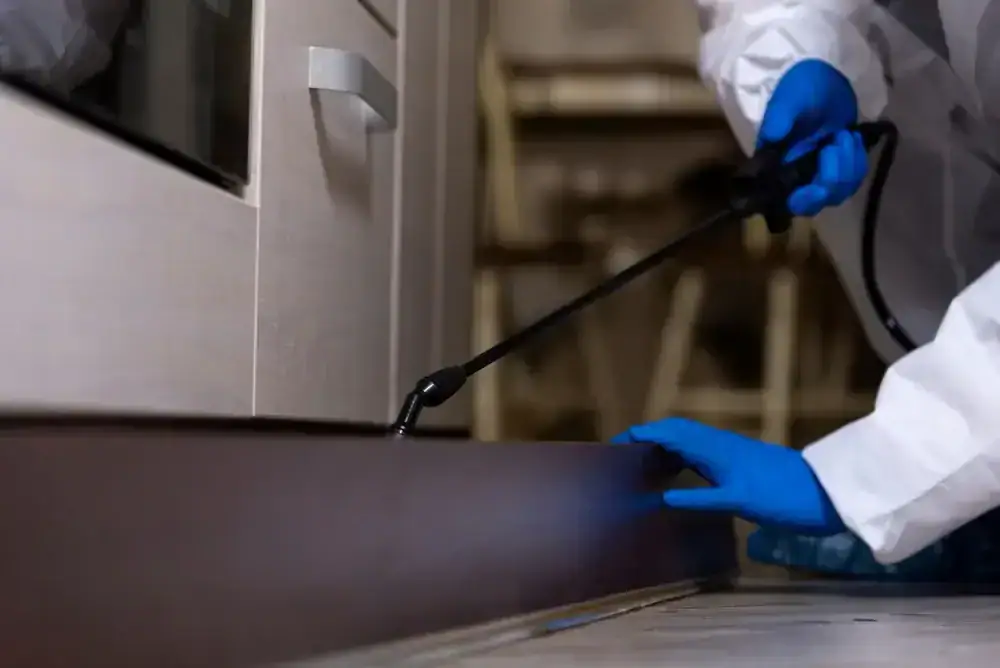
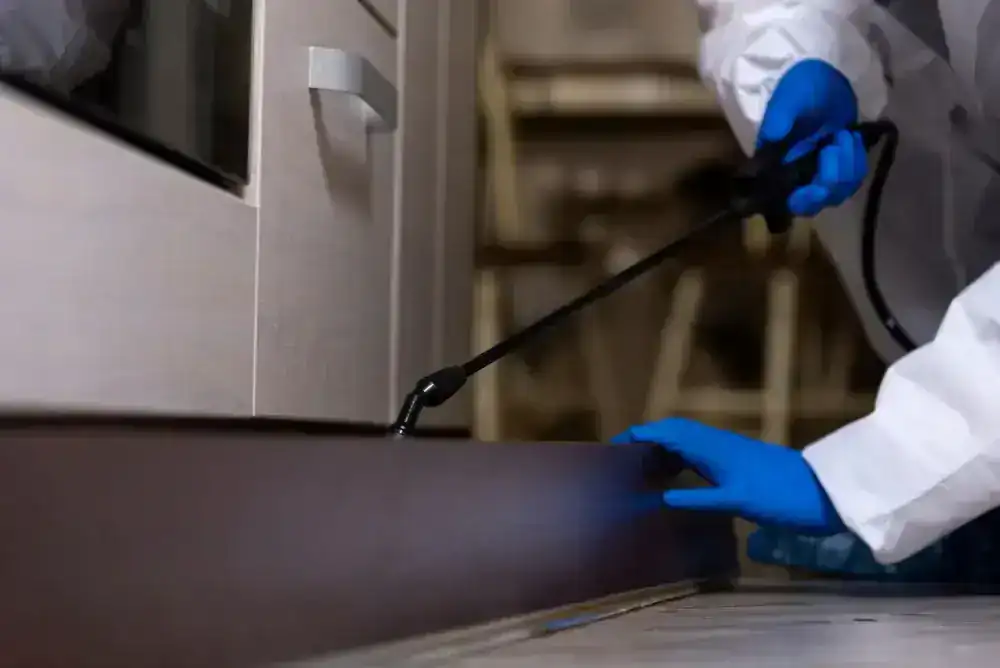
The application matters as much as the product. Professionals treat cracks and crevices where bugs actually hide, not just surface areas where you see them. Behind baseboards. Inside electrical outlets. Along carpet edges. In the seams and folds of furniture. These are precision applications, not broad spraying.
Chemical treatment typically requires multiple visits spaced two to three weeks apart. The first treatment kills active bugs. The second catches newly hatched nymphs before they mature and reproduce. Sometimes a third visit is needed to confirm elimination. Professional treatments take two to three visits to start working, which is why patience matters as much as product selection.
This approach costs less upfront than heat treatment—usually $200 to $400 per room for chemical applications. But factor in multiple visits, and the total cost climbs. You’re also looking at a longer timeline. Where heat treatment might be done in a day, chemical treatment takes weeks to complete.
The prep work is extensive. You’ll need to wash and bag clothing, empty drawers, pull beds away from walls, and sometimes disassemble furniture so technicians can treat every surface. Miss a step, and you’ve left bugs a place to hide and survive. Approximately 70% of all bed bugs in typical infestations are located on the mattress, box spring, and bed frame, but the other 30% scattered throughout the room can restart the entire infestation if treatment isn’t thorough.
Chemical treatment works best for smaller infestations caught early, or as part of an integrated approach combined with heat and other methods. It’s not ideal as a standalone solution for heavy infestations, especially in cluttered environments where thorough application becomes nearly impossible.
Want live answers?
Connect with a First Choice Pest Control expert for fast, friendly support.
Detection dogs can smell bed bugs in concentrations humans can’t detect. They’re trained to identify the specific pheromones bed bugs produce, even when only a few bugs or eggs are present.
In controlled studies, properly trained dogs showed 98% accuracy in locating live bed bugs and 96% accuracy detecting viable eggs. That’s significantly better than visual inspection alone, which catches only about 30% of infestations. Dogs can check an entire home in minutes, alerting to specific locations where bugs are hiding.
This matters for early detection. Catching an infestation when it’s five bugs instead of five hundred makes treatment faster, cheaper, and more likely to succeed on the first attempt. It also matters for confirming treatment success—bringing a dog back after treatment to verify no bugs remain.
Here’s the part nobody likes to talk about: not all bed bug dogs perform equally. Research on detection teams working in real apartments found accuracy rates varied dramatically, with mean detection rates of 44% and false-positive rates of 15% across different teams. Some hit 100% detection while others dropped as low as 10%.
The difference comes down to training, handler experience, and working conditions. A well-trained dog with an experienced handler who understands canine behavior will deliver reliable results. A dog that’s not reinforced daily, working with an inexperienced handler, or operating in distracting environments won’t.
Environmental factors matter too. High temperatures in un-air-conditioned spaces affect dog performance. Strong odors from cleaning products or other pests create distractions. Clutter makes thorough searching difficult. These aren’t excuses—they’re realities that impact accuracy.
That’s why reputable companies always confirm dog alerts with visual inspection before recommending treatment. The dog narrows down the search area. The technician verifies what’s actually there. You’re not paying for expensive treatment based solely on a dog’s alert without evidence.
We’re one of fewer than 100 companies in the United States offering certified canine bed bug detection. Our service provides an advantage for early detection and post-treatment verification, especially in Genesee County where bed bug pressure remains consistently high. But it’s part of a comprehensive approach, not a standalone solution.
If you’re considering a company that uses detection dogs, ask about their training and certification. Ask if they visually confirm alerts before recommending treatment. Ask about their false positive rate. Companies that are transparent about their dog’s performance and limitations are more trustworthy than those promising 98% accuracy without context.
Let’s address the elephant in the room. You’re probably wondering if you can handle this yourself and save the cost of professional treatment.
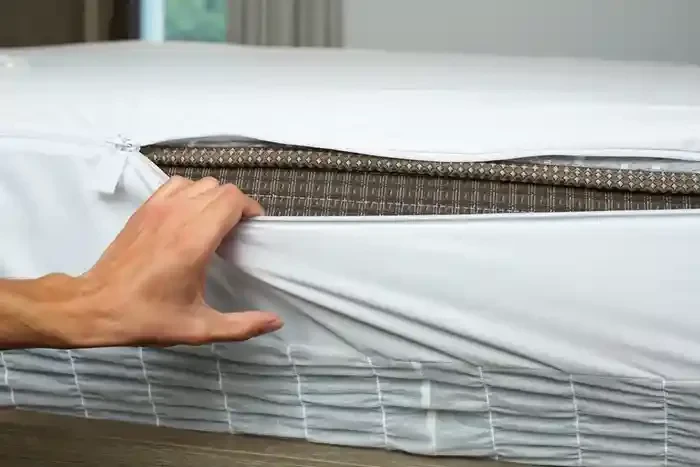
Some DIY methods do work—for very small, localized infestations caught immediately. Washing and drying infested bedding on high heat for 30 minutes kills bugs and eggs. Vacuuming removes visible bugs, though it won’t get the eggs cemented into cracks. Mattress encasements trap bugs inside where they’ll eventually starve. Interceptors under bed legs catch bugs trying to climb up to feed.
These are all legitimate tools professionals use too. The problem is that most people don’t discover bed bugs until the infestation has spread beyond what these methods can handle alone.
DIY heat treatment with a clothes dryer works for items that can withstand it. Trying to heat your home by cranking up the thermostat doesn’t work and is dangerous. Freezing items at 0°F for four days kills bed bugs, but most home freezers don’t maintain that temperature consistently.
Store-bought pesticides face two problems. First, they often contain pyrethroids that bed bugs have developed resistance to. Second, they’re designed for surface application, not the deep crack-and-crevice treatment needed to reach where bugs actually hide. You might kill the bugs you can see while missing the majority of the population.
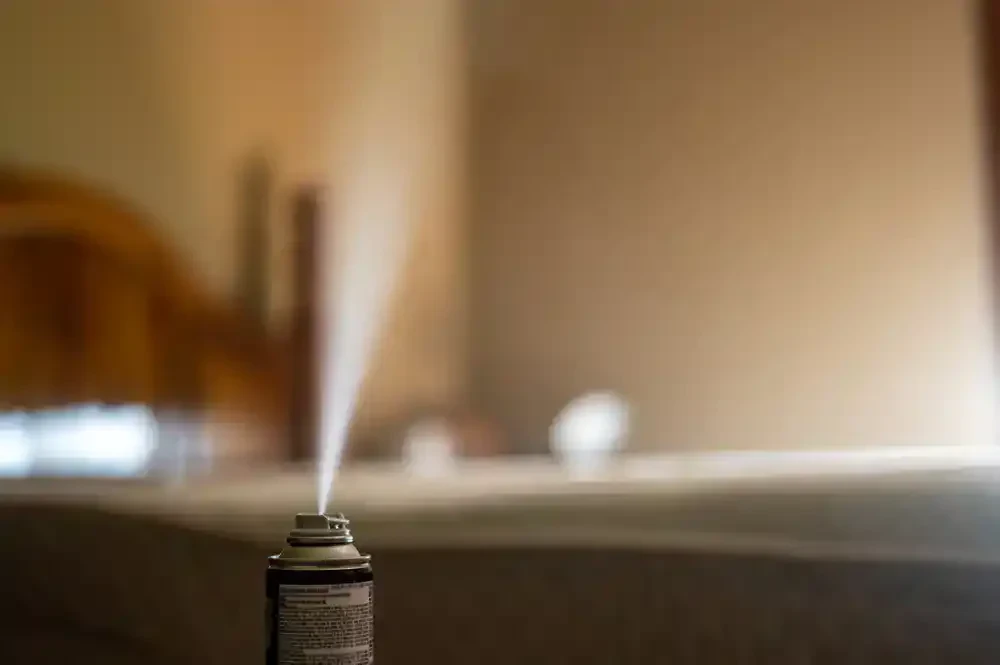
Bug bombs and foggers are particularly ineffective. The spray doesn’t penetrate into the tight spaces where bed bugs hide. You’re essentially fumigating the air while the bugs sit safely tucked into mattress seams and furniture joints, waiting for you to finish.
The CDC recommends professional pest control for bed bug elimination because DIY treatment can take weeks to months with no guarantee of success. During that time, the infestation grows. A few bugs become dozens, then hundreds. What started as a $300 problem becomes a $3,000 problem. A single missed pregnant female can restart an infestation, which is why thoroughness matters more than any single treatment method.
Here’s the honest assessment: if you’ve found bed bugs in one small area, caught them within days of introduction, and you’re willing to be extremely thorough with treatment and monitoring, DIY might work. If you’ve been dealing with bites for weeks, if you’re finding bugs in multiple rooms, or if you’ve already tried DIY methods without success, you’re past the point where self-treatment is practical.
Effective bed bug control comes down to using the right methods for your specific situation. Small infestations respond to targeted treatment. Heavy infestations require comprehensive approaches, often combining heat treatment with chemical applications and ongoing monitoring.
The most important factor isn’t which method you choose—it’s getting professional help before the problem becomes unmanageable. Every week you wait, the infestation grows exponentially. Treatment becomes more expensive, more disruptive, and less likely to succeed on the first attempt.
We bring 26 years of experience to bed bug treatment in Genesee County, MI. We offer multiple treatment options including heat therapy, chemical applications, and canine detection services. As a family-owned business celebrating 20 years of local service, we provide the personalized attention and expertise that makes the difference between eliminating bed bugs and just pushing them around your home.
Article details:
Share:
Continue learning: