
In-Depth Guides for Smarter Pest Control Decisions
Tiny blood spots and unexplained bites could mean bed bugs. Learn to spot the early warning signs before a small problem becomes a costly nightmare.
Share:

Summary:
The earliest signs of bed bugs aren’t always the bugs themselves. In fact, you’re more likely to notice what they leave behind.
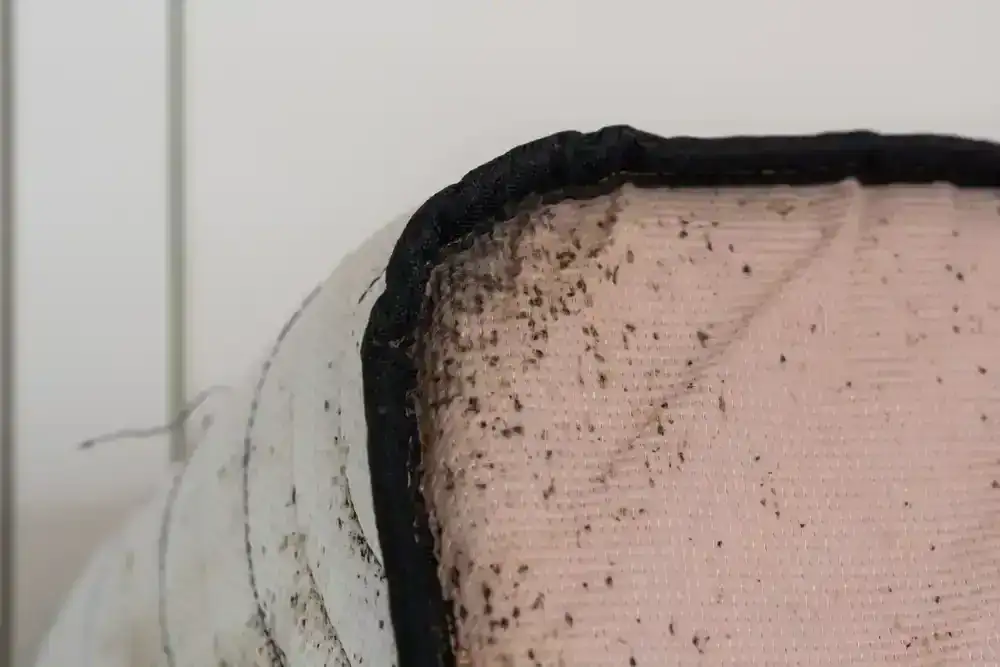
Small reddish-brown stains on your sheets are one of the first clues. These blood spots happen when bed bugs get crushed after feeding, or when a bite bleeds slightly during the night. You might also see tiny dark spots—about the size of a period—on your mattress, pillowcase, or nearby furniture. These are fecal marks, and they’re one of the most reliable indicators that bed bugs are present.
Some people notice bites first. But here’s the problem: not everyone reacts to bed bug bites the same way, and the marks can look like mosquito bites , flea bites, or even a skin rash. That’s why physical evidence on your bedding and furniture is a better starting point than bites alone.

Blood spots are often the first thing people notice when bed bugs move in. These stains are usually small, dark red, and either round or smeared across your sheets or pillowcase.
They show up because bed bugs feed on your blood while you sleep, and sometimes they get crushed when you roll over. Other times, a bite site might bleed slightly after they’ve finished feeding. Either way, these spots tend to appear near the head of the bed or along the edges where your body makes contact with the sheets.
If you’re seeing random blood spots and you haven’t had a nosebleed or cut yourself recently, it’s worth investigating further. Check the seams of your mattress, the crevices in your bed frame, and the area between your pillow and pillowcase. Bed bugs like to hide close to where they feed, so these are prime locations.
Fresh stains are more concerning than old ones because they suggest active feeding. If the spots are showing up regularly—say, every few days—that’s a sign the population might be growing. Don’t ignore it. Early bed bug detection means you’re dealing with a handful of bugs instead of hundreds, and that makes all the difference when it comes to bed bug control.
The stains won’t always be obvious, especially on darker bedding. That’s one reason lighter-colored sheets can help during an inspection. You want to be able to see what’s happening so you can act before the problem gets out of hand.
Bed bugs leave behind more than blood. They also excrete digested blood, which shows up as small black or dark brown spots on your mattress, bed frame, and nearby surfaces.
These fecal marks look like tiny ink dots, and they tend to cluster in areas where bed bugs hide—along mattress seams, in the corners of your box spring, behind the headboard, or in the cracks of your bed frame. If you rub one of these spots with a damp cloth, it will smear and leave a brownish stain. That’s because the waste contains iron from the blood they’ve digested.
You might also find shed skins, which look like translucent, empty shells of the bugs themselves. Bed bugs molt five times before reaching adulthood, and each time they shed their exoskeleton. These casings are usually pale yellow or light brown, and they’re about the same shape as a bed bug but hollow. Finding these near your bed is a clear sign that bed bugs are not only present but actively growing.
In the early stages of an infestation, you might only see a few of these signs. Maybe one or two fecal spots near a seam, or a single shed skin tucked into a corner. It’s tempting to think it’s not a big deal, but even a small amount of evidence means there are live bugs nearby, and they’re reproducing.
Check the usual hiding spots first: the piping along your mattress, the tags, the seams of your box spring, and any cracks in the bed frame or headboard. If the infestation is still new, that’s where you’ll find the evidence. As the population grows, bed bugs spread outward—into nightstands, baseboards, electrical outlets, and even picture frames. But in the beginning, they stick close to the bed.
The key is to act as soon as you see these bed bug signs. Waiting even a few weeks can turn a manageable problem into a full-scale infestation that’s much harder and more expensive to eliminate.
Want live answers?
Connect with a First Choice Pest Control expert for fast, friendly support.
Bed bugs are small, flat, and excellent at hiding. They don’t just live on your mattress—they squeeze into cracks, crevices, and tight spaces where they won’t be disturbed during the day.
Start with your bed. That’s where most infestations begin. Pull back your sheets and inspect the mattress carefully, paying close attention to the seams, piping, and tags. Check the box spring next, especially the underside if you can flip it over. Bed bugs love the small gaps and folds in these areas because they’re dark, close to their food source, and rarely disturbed.
Don’t stop at the mattress. Check your bed frame, headboard, and any furniture within a few feet of where you sleep. Nightstands, dressers, and even the baseboards near your bed are common hiding spots once an infestation starts to grow.

Your mattress is ground zero for bed bugs. They want to be as close to you as possible, and that means hiding in the seams, folds, and corners of your mattress and box spring.
Use a flashlight and a flat object like a credit card to help you inspect. Start at one corner of the mattress and work your way around, pulling back the fabric along the seams and checking every fold. Look for live bugs, shed skins, fecal spots, or eggs. Bed bug eggs are tiny—about the size of a pinhead—and they’re white or translucent, so they’re easy to miss if you’re not looking closely.
The box spring is just as important. Flip it over if you can and check the underside, especially the thin fabric covering the bottom. Bed bugs often hide in the wooden frame inside the box spring, and they’ll leave fecal stains and shed skins in those areas. If there are any tears or openings in the fabric, inspect inside with your flashlight.
Pay attention to the piping—the corded edge that runs along the border of most mattresses. Bed bugs love to tuck themselves into that narrow space because it’s protected and close to where you sleep. Run your credit card or a similar tool along the piping to dislodge anything hiding there.
If you find even one live bug, a few eggs, or a cluster of fecal spots, you’re dealing with an active infestation. It might be small now, but bed bugs reproduce quickly. A single female can lay hundreds of eggs in her lifetime, and those eggs hatch in about a week under the right conditions. That’s why early detection matters so much.
Don’t assume you’re in the clear if you don’t find anything on your first inspection. Bed bugs are experts at hiding, and a low-level infestation can be hard to spot with the naked eye. If you’re still seeing signs—bites, blood spots, fecal marks—but can’t locate the bugs, it might be time to call in a professional with the tools and training to find them.
Once bed bugs establish themselves in your mattress, they start to spread. The next places to check are the furniture and fixtures near your bed.
Nightstands and dressers are common expansion points. Pull out the drawers and inspect the joints, corners, and undersides. Bed bugs like to hide in the small gaps where wood meets wood, and they’ll leave fecal stains in those areas. Don’t forget to check the back of the furniture and any areas that sit flush against the wall.
Upholstered furniture is another favorite hiding spot. If you have a chair, couch, or bench in your bedroom, inspect the seams, cushions, and any crevices in the frame. Bed bugs will move into these areas if the infestation grows, especially if someone sits or rests there regularly.
Baseboards and walls are often overlooked, but they’re important. Bed bugs can hide behind loose baseboards, in cracks along the wall, and even behind electrical outlet covers. If you’re dealing with a more advanced infestation, you might find bugs or fecal stains in these areas. In apartments and multi-family homes in Genesee County, MI, bed bugs can also travel through walls from one unit to another, so even if you’re keeping your bedroom clean, they might be coming from a neighboring space.
Picture frames, clocks, and other wall-mounted items are worth checking too. Bed bugs will hide behind anything that offers a dark, undisturbed space. Remove these items from the wall and inspect the back and the area where they were hanging.
If you’re in an apartment or condo, talk to your landlord or property manager if you find signs of bed bugs. In multi-unit buildings, treating just one apartment usually isn’t enough. The bugs can move between units, so a coordinated approach is often necessary to fully eliminate the problem.
The goal at this stage is to confirm whether you have bed bugs and get a sense of how widespread the issue is. If you’re finding evidence in multiple rooms or in areas beyond the bed, the infestation has likely been growing for a while, and professional bed bug control is your best option.
Finding early signs of bed bugs doesn’t mean you’re facing a disaster—it means you have a chance to stop the problem before it gets worse.
If you’ve spotted blood spots, fecal marks, shed skins, or even a live bug, don’t panic. Start by isolating the affected area as much as possible. Wash your bedding in hot water and dry it on the highest heat setting your fabrics can handle. Vacuum your mattress, bed frame, and surrounding furniture thoroughly, and dispose of the vacuum bag or empty the canister into a sealed plastic bag immediately.
But here’s the reality: bed bugs are tough to eliminate on your own, especially if the infestation has already spread beyond the earliest stages. Professional pest control is the most effective way to ensure the problem is fully resolved. At First Choice Pest Control , we bring 20 years of experience serving Genesee County, MI, along with specialized tools like canine bed bug detection—a service offered by fewer than 100 companies in the U.S. Early intervention saves time, money, and stress, and it’s always easier to treat a small problem than a large one.
Article details:
Share:
Continue learning: